双圈壶
Explore this classic Yixing pottery design and its significance in tea culture
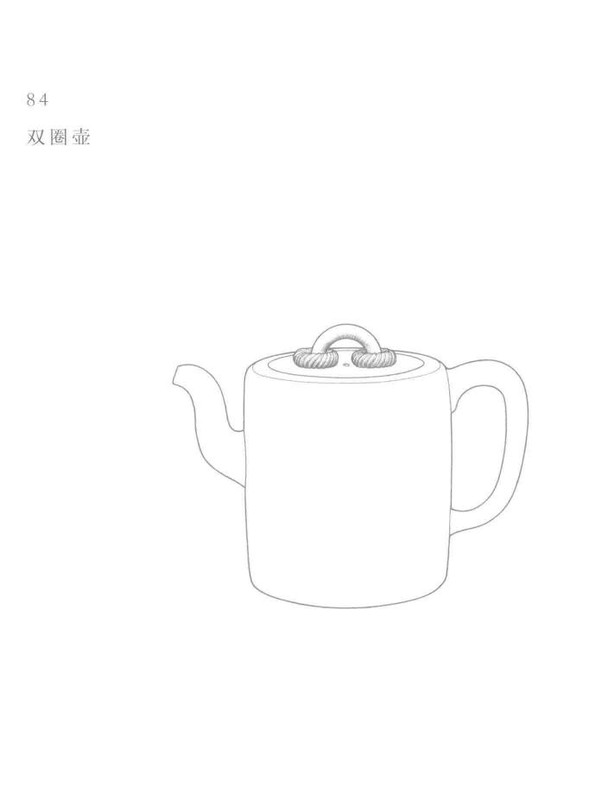
The Shuangquan Hu: Discovering the Timeless Elegance of the Double Ring Teapot
When you first encounter a Shuangquan Hu (双圈壶), or “Double Ring Pot,” you might notice something wonderfully understated about its presence. This isn’t a teapot that shouts for attention with elaborate dragons or intricate carvings. Instead, it speaks in the quiet language of classical Chinese aesthetics—through proportion, balance, and the kind of refined simplicity that takes generations to perfect.
The name itself offers a clue to its character. “Shuang” means double or pair, while “quan” refers to rings or circles, and “hu” simply means pot. Those distinctive rings that give this teapot its name aren’t mere decoration—they’re a statement of design philosophy, a nod to the ancient Chinese appreciation for geometric harmony and the symbolic power of the circle.
A Design Rooted in Tradition
The Shuangquan Hu belongs to that special category of Yixing teapots known as “classic designs”—forms that have been refined over centuries until they achieve a kind of perfection that transcends trends. While we can’t pinpoint its exact origin to a specific dynasty or decade, this very timelessness is part of its appeal. The design has survived because it works, both aesthetically and functionally.
Yixing pottery, crafted from the unique zisha (purple clay) found in the Yixing region of Jiangsu Province, has been the gold standard for Chinese teaware since at least the Ming Dynasty. But the Shuangquan Hu represents something particular within this tradition—it’s a design that prioritizes clean lines and structural integrity over ornamental flourishes. This reflects a Confucian aesthetic principle: that true beauty emerges from proper proportion and honest craftsmanship rather than superficial decoration.
The double rings that characterize this pot typically appear as raised bands encircling the body, creating visual rhythm and breaking up what might otherwise be a simple rounded form. These rings serve multiple purposes: they add structural reinforcement, create pleasing shadows that change with the light, and provide subtle texture that makes the pot more engaging to hold and observe.
The Visual Poetry of Form
What makes a Shuangquan Hu immediately recognizable? Let’s start with the body. Most examples feature a gently rounded or slightly compressed spherical shape—not quite a perfect ball, but something more grounded and stable. This form is practical: it provides ample space for tea leaves to unfurl and dance during steeping, while the rounded interior promotes even heat distribution.
The rings themselves are the defining feature, usually positioned to divide the body into harmonious sections. In the most successful examples, these rings aren’t merely applied to the surface but feel integral to the pot’s structure, as if the form naturally expressed itself this way. The spacing between rings, their width, and their profile (whether sharp-edged or softly rounded) all contribute to the pot’s overall character.
The spout on a traditional Shuangquan Hu tends toward elegance rather than drama—a graceful curve that extends naturally from the body, positioned to ensure a smooth, controlled pour. The best examples achieve that magical quality where the tea flows in a single, unbroken stream that stops cleanly when you return the pot upright, without dripping or dribbling.
The handle typically mirrors the spout’s curve in reverse, creating visual balance. It’s usually substantial enough to provide a secure grip but refined enough not to overwhelm the pot’s proportions. Many Shuangquan Hu handles feature a gentle S-curve that fits naturally in the hand while maintaining the pot’s classical aesthetic.
The lid deserves special attention. On a well-made Shuangquan Hu, the lid fits with remarkable precision—tight enough to retain heat and aroma, yet easy to remove. The lid’s profile often echoes the body’s curves, and the knob (or “button” as it’s sometimes called) might be a simple dome, a small ring, or a bridge-style handle. Whatever form it takes, it should feel like an inevitable conclusion to the pot’s design rather than an afterthought.
The Magic of Zisha Clay
To understand why the Shuangquan Hu works so beautifully as a tea brewing vessel, we need to talk about the material itself. Yixing zisha clay is genuinely unique—a naturally occurring mixture of minerals that, when fired, becomes porous at a microscopic level. This porosity is the secret to Yixing’s legendary reputation among tea connoisseurs.
Unlike glazed ceramics or glass, an unglazed Yixing pot actually breathes. It absorbs tiny amounts of the oils and essences from the tea brewed in it, gradually developing what enthusiasts call a “seasoning” or “patina.” Over months and years of use, a dedicated Shuangquan Hu becomes increasingly attuned to the specific tea you brew in it, subtly enhancing its flavor profile.
The clay’s thermal properties are equally important. Zisha retains heat exceptionally well, maintaining stable brewing temperatures, yet it doesn’t conduct heat rapidly to the exterior, so the pot remains comfortable to handle even when filled with boiling water. This makes the Shuangquan Hu’s simple, uninsulated handle perfectly practical.
The natural colors of zisha clay range from rich purples and deep browns to warm reds and golden yellows, depending on the specific clay body and firing temperature. A Shuangquan Hu might be crafted from any of these clay types, and part of the pleasure of owning one is watching how its surface develops character over time—darkening slightly, developing a subtle sheen, and acquiring that prized “tea patina” that signals a well-loved pot.
Finding the Perfect Tea Match
One of the most common questions new Yixing owners ask is: “What tea should I brew in this pot?” For the Shuangquan Hu, the answer depends partly on the specific clay body, but the pot’s form gives us some guidance.
The rounded body with good interior volume makes this design particularly well-suited to oolongs—those magnificent semi-oxidized teas that unfurl dramatically when steeped. A high-fired Taiwanese oolong, with its floral complexity and creamy texture, finds a perfect home in a Shuangquan Hu. The pot’s heat retention helps coax out the tea’s aromatic compounds, while the clay’s subtle porosity softens any harsh edges.
Traditional Wuyi rock oolongs, with their mineral depth and roasted character, also pair beautifully with this pot style. The Shuangquan Hu’s classical form seems to complement these teas’ ancient heritage, and the clay’s properties help emphasize their smooth, lingering finish.
For those who prefer darker teas, a Shuangquan Hu works wonderfully with aged oolongs, ripe pu-erh, or even robust black teas. The key is to dedicate your pot to one general category of tea. The traditional wisdom is to use one pot exclusively for one type of tea—or at least for teas with similar flavor profiles—so the seasoning that develops enhances rather than confuses the taste.
Lighter teas like green tea or white tea are generally less ideal for Yixing pots, as these delicate teas can be overwhelmed by the clay’s influence and don’t benefit as much from the heat retention. Save your Shuangquan Hu for teas with more body and complexity.
Brewing with Your Shuangquan Hu
Using a Shuangquan Hu isn’t complicated, but there’s a gentle learning curve to getting the most from it. Here’s how to approach brewing with this classical design.
Seasoning Your New Pot
Before first use, your Shuangquan Hu needs a simple seasoning process. Rinse it thoroughly with hot water to remove any dust from storage. Then, place it in a pot of water with some leaves of the tea you plan to brew in it, bring to a gentle simmer for 20-30 minutes, and let it cool naturally. This opens the clay’s pores and gives it an initial introduction to your chosen tea.
The Brewing Process
Start by warming the pot—pour hot water over and into it, swirl, and discard. This preheating is crucial for maintaining proper brewing temperature.
Add your tea leaves. The Shuangquan Hu’s generous interior means you can use a fairly substantial amount—typically filling the pot about one-quarter to one-third full with dry leaves, depending on the tea type.
Pour your water at the appropriate temperature for your tea. For most oolongs, this means water just off the boil (around 195-205°F or 90-96°C). Pour in a circular motion to ensure all leaves are evenly wetted.
For the first infusion, pour out the tea after just a few seconds—this is the “rinse” or “awakening” that opens the leaves and prepares them for proper brewing. Discard this first infusion (or use it to warm your cups).
Subsequent infusions can be progressively longer. Start with 20-30 seconds for the second infusion, then gradually increase the time with each successive steep. A good oolong might give you six to ten infusions, each revealing different facets of the tea’s character.
The Pour
One of the pleasures of a well-made Shuangquan Hu is the pour itself. Hold the pot with your thumb on the lid (to keep it secure) and your fingers through or around the handle. Tip smoothly and decisively—hesitation leads to drips. The tea should flow in a single, controlled stream. When you return the pot upright, the flow should stop cleanly.
Care and Maintenance
Caring for your Shuangquan Hu is refreshingly simple. After each tea session, empty the leaves, rinse the pot thoroughly with hot water (no soap—ever!), and let it air dry completely with the lid off. The clay needs to breathe and dry fully between uses to prevent any musty odors from developing.
Never put your Yixing pot in the dishwasher, and avoid sudden temperature shocks. Don’t pour boiling water into a cold pot—always warm it gradually.
Between uses, store your Shuangquan Hu in a place with good air circulation, away from strong odors (the porous clay will absorb them). Many enthusiasts keep their pots on an open shelf where they can admire them between tea sessions.
Over time, you’ll notice your pot developing that coveted patina—a subtle sheen and deepening of color that comes from the tea oils and the natural oils from your hands. This is a sign of a well-loved pot and actually enhances its performance.
The Deeper Pleasure
What makes the Shuangquan Hu special isn’t just its functionality or its aesthetic appeal—it’s the way it connects you to a centuries-old tradition of tea appreciation. Every time you brew tea in this pot, you’re participating in a ritual that has brought pleasure and contemplation to countless people across generations.
The double rings that give this pot its name can be seen as a metaphor for the layers of experience that tea drinking offers: the immediate sensory pleasure and the deeper, more reflective satisfaction that comes with mindful attention. The pot’s classical simplicity encourages you to focus on what matters—the quality of the tea, the precision of the brewing, the moment of quiet in a busy day.
As your Shuangquan Hu seasons and develops character, it becomes uniquely yours—a tool shaped by your habits and preferences, a partner in your tea journey. This is the magic of Yixing pottery: it’s not just a vessel but a living thing that grows and changes with use.
Whether you’re new to gongfu tea brewing or a seasoned enthusiast, the Shuangquan Hu offers something valuable: a reminder that sometimes the most enduring designs are those that eschew novelty in favor of timeless principles. In its balanced proportions and honest craftsmanship, this double-ringed pot embodies an aesthetic philosophy that remains as relevant today as it was centuries ago.
So fill your Shuangquan Hu with good leaves, pour with intention, and savor not just the tea but the entire experience—the warmth of the clay in your hands, the arc of the pour, the aroma rising with the steam. This is what the classical Yixing tradition offers: not just better tea, but a better way of being present with tea.