传炉壶
Explore this classic Yixing pottery design and its significance in tea culture
The Chuanlu Hu (传炉壶): A Timeless Vessel for the Modern Tea Ritual
There’s something profoundly satisfying about holding a teapot that has existed in essentially the same form for centuries. The Chuanlu Hu—literally translated as “Incense Burner Pot”—is one of those rare designs that seems to have captured something essential about the tea experience and held it perfectly still across generations of potters and tea drinkers.
If you’ve spent any time exploring Yixing teaware, you’ve probably noticed that certain shapes keep appearing, refined and reinterpreted but fundamentally unchanged. The Chuanlu Hu is one of these enduring classics, a design so balanced and purposeful that potters continue to return to it, finding new subtleties in its deceptively simple form.
A Shape Born from Ancient Ritual
The name itself tells you where this design draws its inspiration. The Chuanlu Hu takes its form from traditional Chinese incense burners—those three-legged bronze vessels that have graced temples, scholar’s studios, and ceremonial spaces for thousands of years. These ancient censers, with their rounded bodies and steady presence, represented more than just functional objects. They were bridges between the earthly and the spiritual, vessels that transformed material substance into fragrant smoke and contemplative atmosphere.
When Yixing potters began adapting this form for tea, they weren’t simply copying an aesthetic. They were translating an entire philosophy of ritual and refinement into a new medium. The incense burner’s stable, grounded presence became a metaphor for the tea ceremony itself—a practice that transforms leaves and water into something that nourishes both body and spirit.
The transition makes perfect sense when you think about it. Both incense and tea occupy similar spaces in Chinese culture: they slow time, create atmosphere, and invite mindfulness. Both require attention to detail and an appreciation for subtle transformations. A vessel designed to honor one could naturally evolve to serve the other.
Reading the Design: Form Follows Function
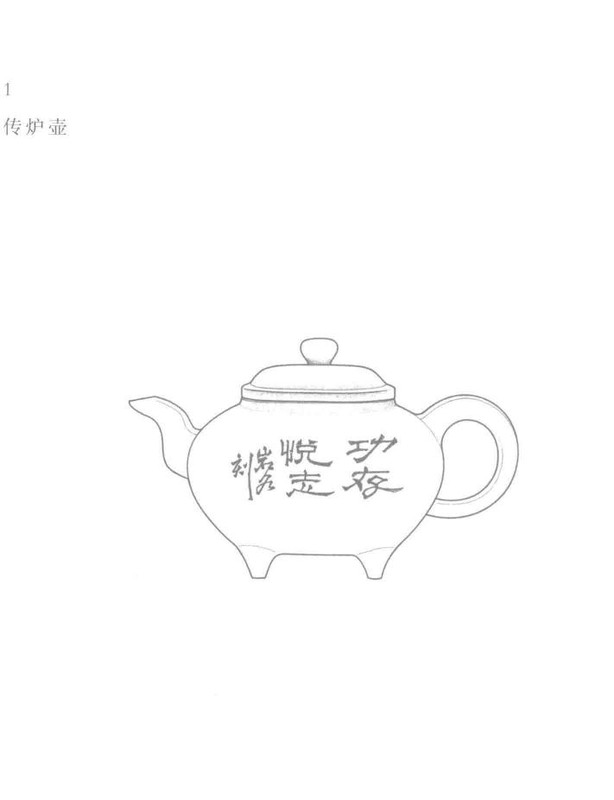
At first glance, the Chuanlu Hu might seem straightforward—a rounded body, a curved spout, a handle that arcs gracefully from shoulder to base. But spend time with this design, and you’ll start noticing the careful decisions embedded in every curve and proportion.
The body sits low and wide, with a gentle swell that gives it presence without bulk. This isn’t a tall, elegant pot that draws the eye upward. Instead, it hugs the tea table, stable and unassuming. That low center of gravity isn’t just aesthetic—it makes the pot remarkably steady during pouring, reducing the chance of wobbles or spills when you’re working with precious tea.
The spout typically emerges from the body in a smooth, confident curve. Unlike some Yixing designs that feature dramatic, angular spouts, the Chuanlu Hu’s spout flows naturally from the shoulder, creating a pour that’s controlled without being timid. Good examples will have a spout that cuts off cleanly, without dripping or dribbling—a detail that seems minor until you’ve dealt with a pot that leaves water spots all over your tea table.
The handle completes the composition with a generous arc that gives your fingers plenty of room. This isn’t one of those delicate handles that forces you to grip with just your fingertips. The Chuanlu Hu’s handle invites a comfortable, secure hold, which matters more than you might think when you’re pouring hot water multiple times during a tea session.
Many versions feature three small feet at the base—a direct reference to those ancient bronze incense burners. These feet serve a practical purpose, lifting the pot slightly off the table to allow air circulation and prevent heat damage to your tea tray. But they also give the pot a distinctive character, a sense of being poised and ready rather than simply sitting.
The lid deserves special attention. Traditional Chuanlu Hu designs often feature a bridge-style lid handle that echoes the main handle’s curve, creating a visual harmony that ties the whole piece together. The lid itself typically sits snugly in the opening, with just enough tolerance to allow steam to escape without rattling loose during pouring.
Clay, Fire, and the Potter’s Hand
What makes a Yixing teapot special isn’t just its shape—it’s the remarkable clay from which it’s formed. The Chuanlu Hu, like all traditional Yixing ware, is crafted from zisha (purple sand), a unique clay found only in the Yixing region of Jiangsu Province. This clay has an unusual mineral composition that gives it properties tea enthusiasts have prized for centuries.
Zisha clay is porous at a microscopic level, which means it breathes. Unlike glazed ceramics that seal everything in, a Yixing pot absorbs tiny amounts of tea oils and flavors over time, gradually developing what tea people call “seasoning.” This is why serious collectors dedicate individual pots to specific tea types—the pot becomes a partner in the brewing process, contributing its accumulated character to each infusion.
The clay’s porosity also affects heat retention. A Chuanlu Hu will hold temperature well without getting uncomfortably hot to handle, and it releases heat gradually, which can help prevent overbrewing. The thick walls typical of this design enhance this thermal stability, making it particularly forgiving for tea drinkers still developing their timing and technique.
Traditional Chuanlu Hu pots are formed entirely by hand, using techniques that haven’t changed substantially in centuries. The potter works with flat slabs and coils of clay, building up the form piece by piece, joining sections with slip and careful pressure. This hand-building process leaves subtle traces—slight variations in wall thickness, the particular way the spout joins the body, the exact curve of the handle. These aren’t flaws; they’re signatures of human craft, evidence that a skilled maker shaped this specific pot.
After forming, the pot is fired in a kiln at temperatures that transform the clay’s structure, making it hard and durable while preserving its porosity. The firing process is crucial—too hot, and the clay vitrifies, losing its breathability; too cool, and the pot remains fragile and porous in the wrong ways. Master potters develop an intuitive understanding of how their kilns behave, adjusting firing times and temperatures based on weather, clay batch, and the specific pieces being fired.
Choosing Your Tea: What Brews Best in a Chuanlu Hu
One of the most common questions new Yixing owners ask is: “What tea should I brew in this pot?” With the Chuanlu Hu, the answer is wonderfully flexible, though certain teas do shine particularly bright.
The pot’s rounded body and moderate size make it excellent for oolongs, especially the darker, more oxidized varieties. A traditional Wuyi rock oolong like Da Hong Pao or Shui Xian finds a perfect home in a Chuanlu Hu. The pot’s heat retention helps coax out the deep, mineral notes these teas are famous for, while its shape allows the leaves plenty of room to unfurl and release their complex flavors.
Aged oolongs—those mysterious, dark-leafed teas that have been stored for years or decades—also pair beautifully with this design. The Chuanlu Hu’s stable temperature and generous body give these teas the warm, consistent environment they need to reveal their mellowed, often fruity or woody character.
Ripe pu-erh is another natural match. These fermented teas benefit from the kind of steady, enveloping heat the Chuanlu Hu provides. The pot’s shape encourages good circulation during steeping, helping to extract the smooth, earthy flavors that make ripe pu-erh so comforting. Over time, as your pot seasons with pu-erh oils, it will develop a patina that enhances each subsequent brewing.
Some tea drinkers dedicate their Chuanlu Hu to red teas (what the West calls black tea). A good Dian Hong or Zheng Shan Xiao Zhong can be magnificent from this pot, with the clay softening any harsh edges while preserving the tea’s natural sweetness and body.
What about green tea? Here, tradition suggests caution. Green teas generally prefer cooler water and shorter steeping times, and the Chuanlu Hu’s heat retention can make it easy to overbrew delicate greens. That said, some heartier green teas—certain Japanese varieties or robust Chinese greens—can work if you’re attentive to your timing.
The key is to choose one category and stick with it. The pot will gradually absorb the character of whatever you brew in it, and mixing tea types can create muddy, confused flavors. This isn’t a limitation—it’s an invitation to deepen your relationship with a particular tea, to explore its nuances through repeated, focused brewing.
Brewing Wisdom: Getting the Most from Your Pot
Using a Chuanlu Hu isn’t complicated, but a few practices will help you get the best results and care for your pot properly.
Before your first use, give the pot a thorough rinse with hot water to remove any dust from storage or shipping. Some people like to do an initial “opening” ceremony, boiling the pot gently in water with some of the tea you plan to brew in it. This isn’t strictly necessary, but it’s a nice way to begin your relationship with the pot and start the seasoning process.
When brewing, preheat the pot by filling it with hot water and letting it sit for a minute before discarding the water and adding your tea. This ensures the pot is at the right temperature when you add your leaves, giving you more consistent results.
Don’t overfill the pot. Leave some space at the top—about a finger’s width below the rim—to allow the leaves room to expand and to make pouring easier. The Chuanlu Hu’s shape means leaves will have plenty of room to move and unfurl, which is part of what makes it such an effective brewing vessel.
Pour decisively. The spout is designed to give you control, but you need to commit to the pour. Hesitant, slow pouring can lead to drips and uneven extraction. Tip the pot with confidence, and you’ll find it responds beautifully.
After each session, rinse the pot thoroughly with hot water—no soap, ever. The clay is porous, and soap will be absorbed, potentially ruining your pot’s flavor. Simply rinse well and let the pot air dry completely before putting it away. Some people like to leave the lid off while drying to ensure good air circulation.
Over time, you’ll notice your pot developing a patina—a subtle sheen on the exterior where your hands touch it, a deepening of color, a certain glow that comes from repeated use. This is the pot “raising” or “nourishing,” and it’s one of the pleasures of working with Yixing ware. Each tea session contributes to this transformation, making the pot uniquely yours.
Why This Design Endures
In a world of constant innovation and novelty, there’s something deeply satisfying about using a tool that has proven itself across centuries. The Chuanlu Hu persists not because of tradition for tradition’s sake, but because it works. The design solves real problems—stability, heat retention, comfortable handling, effective pouring—with an elegance that never feels forced or showy.
This is a pot that rewards attention without demanding it. It won’t dominate your tea table or announce itself loudly. Instead, it sits quietly, doing its work, becoming more itself with each use. For tea drinkers who value substance over flash, who find beauty in function perfected, the Chuanlu Hu offers something increasingly rare: a design that knows exactly what it is and does it superbly well.
Whether you’re just beginning to explore Yixing teaware or you’re a seasoned collector, a well-made Chuanlu Hu deserves consideration. It’s versatile enough to accommodate different brewing styles, forgiving enough for developing skills, and refined enough to satisfy experienced palates. Most importantly, it’s a pot that invites regular use—not a precious object to be admired from a distance, but a working tool that becomes more valuable the more you work with it.
In the end, that might be the Chuanlu Hu’s greatest virtue: it reminds us that the best designs are those we can live with daily, that become part of our rituals and rhythms, that age gracefully alongside us. Like the tea ceremony itself, this pot is about finding depth in simplicity, meaning in repetition, and beauty in the everyday act of making something well.