四方小千简盆
Explore this classic Yixing pottery design and its significance in tea culture
The Four-Sided Qianjian: A Geometric Marvel in Yixing Pottery
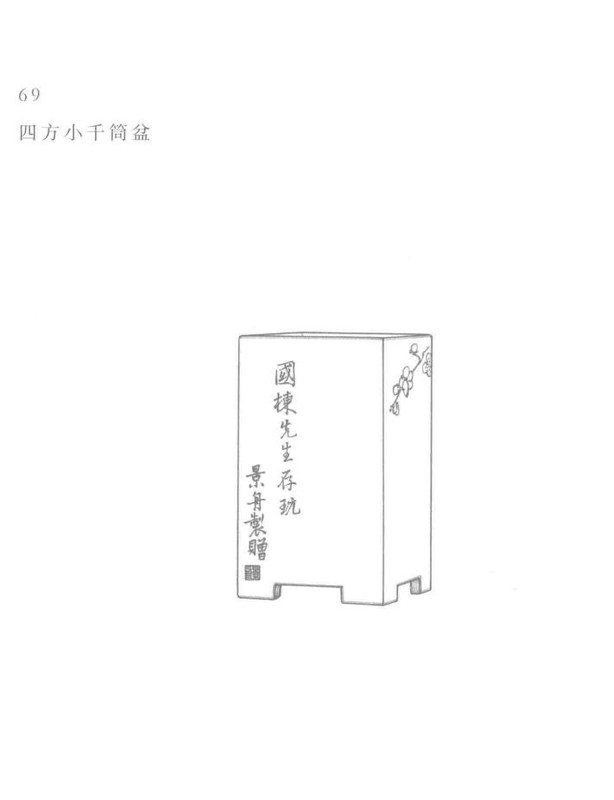
When most people picture a traditional Chinese teapot, they imagine smooth curves and rounded forms that echo the organic shapes found in nature. But the 四方小千简盆 (Sìfāng Xiǎo Qiānjiǎn Pén) – which we might call the “Small Square Qianjian Pot” – takes a decidedly different approach. This classic Yixing design celebrates the beauty of clean lines, sharp angles, and architectural precision, proving that sometimes the most memorable tea vessels are the ones that dare to be different.
A Study in Contrasts
The first time you encounter a Qianjian pot, it challenges your expectations. Where other teapots flow and curve, this design stands firm with its four-sided body. It’s a pot that looks like it was crafted by someone who understood that tea brewing is both an art and a discipline – requiring both creativity and structure.
The name itself offers clues to its character. “Sìfāng” (四方) means “four-sided” or “square,” immediately telling you this isn’t your typical rounded vessel. “Qiānjiǎn” (千简) is more poetic, with “qiān” suggesting multitude or abundance, and “jiǎn” referring to simplicity or bamboo slips used in ancient writing. Together, they evoke an image of elegant simplicity multiplied – a design that achieves complexity through the repetition and refinement of basic geometric forms.
The Architecture of Tea
What makes the Four-Sided Qianjian so visually striking is its architectural quality. The body rises in four distinct planes, creating a form that feels more like a miniature building than a traditional teapot. Each face is typically flat or gently curved, meeting its neighbors at crisp edges that catch the light in fascinating ways.
The lid often continues this geometric theme, sometimes featuring a squared-off knob that mirrors the body’s angularity. The spout and handle, while necessarily curved for functionality, are usually designed to complement rather than compete with the body’s straight lines. Some versions feature a spout that emerges from the body at a decisive angle, like a waterspout on a traditional Chinese building.
The clay itself plays a crucial role in this design’s success. Yixing clay, with its fine texture and ability to hold sharp details, is perfectly suited to maintaining those crisp edges and flat planes. After firing, the unglazed surface develops a subtle sheen that emphasizes the interplay of light and shadow across the pot’s geometric surfaces.
Roots in Tradition
While we don’t have precise dating for the original Qianjian design, it belongs to the rich tradition of Yixing pottery that stretches back centuries. The town of Yixing, located in Jiangsu Province, has been producing distinctive clay teapots since at least the Ming Dynasty (1368-1644), though some evidence suggests the tradition may be even older.
What’s fascinating about geometric designs like the Qianjian is how they reflect broader aesthetic movements in Chinese art and philosophy. The preference for clean lines and balanced proportions connects to principles found in classical Chinese architecture, garden design, and even calligraphy. There’s a Confucian sensibility here – an appreciation for order, harmony, and the beauty that emerges from disciplined craftsmanship.
The square form also carries symbolic weight in Chinese culture. While the circle represents heaven, the square traditionally represents earth – grounding, stable, and reliable. A square teapot thus becomes a vessel that literally brings celestial tea (heaven) down to earth, making the transcendent accessible through the everyday ritual of brewing.
The Potter’s Challenge
Creating a Four-Sided Qianjian pot requires exceptional skill. Unlike rounded forms that can hide minor imperfections in their curves, geometric designs reveal every flaw. The planes must be truly flat, the edges genuinely straight, and the corners precisely angled. Any warping during drying or firing becomes immediately obvious.
Traditional Yixing potters would construct these pots using the “da shen tong” (打身筒) technique – literally “beating the body cylinder.” The potter starts with a slab of clay, carefully measured and cut, then shapes it around a form or by hand into the desired geometric configuration. The edges where the clay meets must be seamlessly joined, requiring both strength and delicacy.
The result of this demanding process is a pot that feels substantial in the hand. The flat sides provide excellent grip, and the weight distribution tends to be very balanced, making pouring a controlled, satisfying experience.
Tea Pairing: Finding the Right Match
One of the joys of Yixing pottery is how different clay bodies and pot shapes interact with various teas. The Four-Sided Qianjian, with its typically medium-sized capacity and structured form, has some particularly interesting characteristics as a brewing vessel.
Oolong Teas: This is where the Qianjian really shines. The pot’s shape provides good heat retention without being overly insulating, which is ideal for the multiple infusions that oolongs demand. Tie Guan Yin, with its floral complexity, develops beautifully in a Qianjian pot. The clay’s porosity allows the tea to breathe between infusions, while the pot’s thermal properties help maintain the consistent temperatures that bring out oolong’s nuanced flavors.
Aged White Teas: The gentle heat retention of a well-made Qianjian makes it excellent for coaxing flavor from aged white teas like aged Shou Mei or Gong Mei. These teas benefit from steady, moderate heat that the pot’s mass provides, allowing their subtle, evolved flavors to unfold gradually.
Ripe Pu-erh: While many tea enthusiasts prefer larger, rounder pots for pu-erh, a Qianjian can work wonderfully with ripe (shou) pu-erh, especially for solo sessions. The pot’s structure helps manage the tea’s earthy intensity, and the clay’s seasoning over time will develop a patina that enhances the pu-erh’s smooth, mellow qualities.
Dan Cong Oolongs: These highly aromatic oolongs from Guangdong Province pair exceptionally well with the Qianjian’s characteristics. The pot doesn’t trap heat excessively, which helps prevent the tea from becoming bitter, while still providing enough warmth to release Dan Cong’s famous floral and fruity aromatics.
Brewing Wisdom: Getting the Most from Your Qianjian
If you’re fortunate enough to brew with a Four-Sided Qianjian pot, here are some practical tips to enhance your experience:
Seasoning Your Pot: Before first use, give your pot a thorough rinse with hot water, then brew several pots of the tea type you plan to dedicate it to. Pour this tea over the exterior as well. This initial seasoning begins the process of building up the tea oils that will, over time, enhance your brewing.
Temperature Management: The geometric form means heat distributes somewhat differently than in a rounded pot. Preheat thoroughly by filling with hot water and letting it sit for a minute before discarding and adding your tea. This ensures even heat distribution across those flat surfaces.
Pouring Technique: The angular body can make pouring feel different from rounded pots. Practice finding the optimal angle – usually slightly more upright than you might expect. The spout’s design typically provides excellent control once you find the right position.
Leaf Quantity: The interior shape affects how leaves expand. Start with your usual ratio, but be prepared to adjust slightly. Some brewers find they can use marginally less leaf in a Qianjian because the geometric interior allows for efficient water circulation.
Cleaning and Care: After each session, rinse thoroughly with hot water only – never soap. The flat surfaces make it easy to ensure all leaf material is removed. Let the pot air dry completely, ideally with the lid off, before storing.
The Aesthetic Experience
Beyond its functional qualities, the Four-Sided Qianjian offers something increasingly rare in our curved, organic modern world – the pleasure of pure geometry. There’s a meditative quality to handling a pot with such clean lines. It feels intentional, considered, almost architectural in your hands.
As you use the pot over time, watching the clay slowly develop its patina, you’re participating in a transformation. The sharp edges remain, but the surface takes on depth and character. Tea oils build up in subtle patterns, creating a visual record of countless brewing sessions. The pot becomes a diary of your tea journey, written in the language of clay and leaf.
A Pot for the Modern Tea Lover
In many ways, the Four-Sided Qianjian feels particularly suited to contemporary sensibilities. Its clean, geometric aesthetic aligns with modern design principles while remaining deeply rooted in tradition. It’s a pot that would look equally at home in a traditional Chinese tea room or on a minimalist Scandinavian table.
For tea enthusiasts who appreciate both form and function, the Qianjian represents an ideal synthesis. It’s beautiful to look at, satisfying to hold, and genuinely enhances the brewing experience. It reminds us that tea culture has always embraced diverse aesthetic approaches – that there’s room for both the organic and the geometric, the flowing and the structured.
Conclusion: Geometry Meets Tradition
The 四方小千简盆 stands as a testament to the creative range within Yixing pottery tradition. While it may not be as immediately recognizable as some rounder, more common shapes, it offers tea lovers something special – a brewing vessel that challenges conventions while honoring centuries of craftsmanship.
Whether you’re drawn to its architectural presence, its practical brewing characteristics, or simply the way it feels different in your hands, the Four-Sided Qianjian invites you to experience tea through a different lens. It’s a reminder that sometimes the most rewarding tea experiences come from vessels that dare to take a different shape, that find beauty in angles rather than curves, and that prove tradition has room for endless variation.
In the end, that’s what makes Yixing pottery so endlessly fascinating – each design, whether rounded or angular, simple or complex, offers its own unique way of transforming leaf and water into something transcendent. The Qianjian simply does it with exceptional style and geometric precision.