报春壶
Explore this classic Yixing pottery design and its significance in tea culture
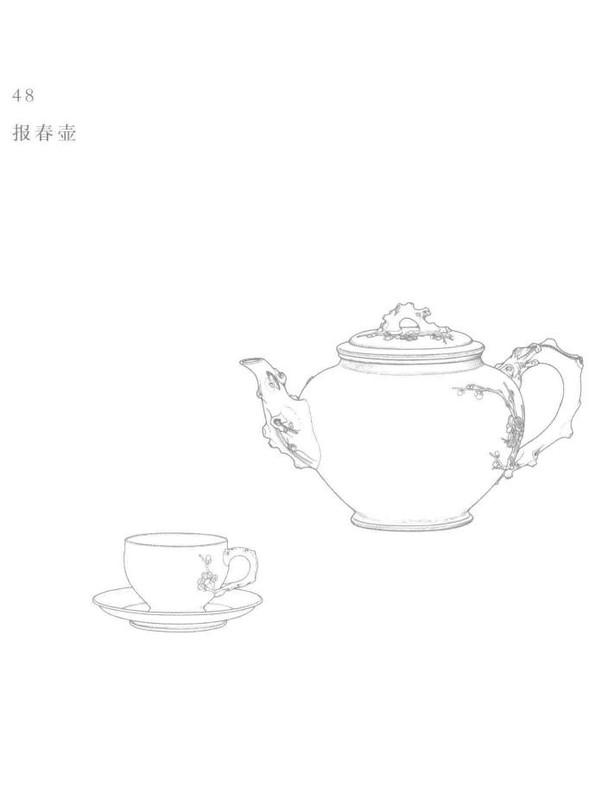
The Baochun Hu (报春壶): A Herald of Spring in Your Tea Ritual
When you hold a traditional Yixing teapot in your hands, you’re not just cradling a vessel for brewing tea—you’re connecting with centuries of Chinese ceramic artistry. Among the classic designs that have endured through generations, the Baochun Hu (报春壶) stands out as a particularly poetic expression of nature’s rhythms and the tea master’s craft.
The name itself whispers of renewal: “Baochun” translates roughly to “announcing spring” or “heralding spring,” evoking images of the first plum blossoms breaking through winter’s grip, or early birds singing their territorial songs as the world awakens. This isn’t merely a functional teapot—it’s a celebration of seasonal change captured in Yixing’s famous purple clay.
A Design Rooted in Natural Observation
The Baochun Hu belongs to that special category of Yixing teapots that draw inspiration directly from the natural world. While I can’t point to the exact moment when this design first emerged from a potter’s wheel, its traditional classification tells us it has been refined and reproduced by skilled artisans across multiple generations, each adding their subtle interpretation while respecting the core aesthetic.
What makes this design particularly captivating is how it embodies the Chinese artistic principle of capturing essence rather than exact representation. The teapot doesn’t literally depict spring flowers or budding branches in obvious relief work. Instead, the form itself suggests the gentle curves of new growth, the balanced proportions reflecting nature’s own harmonious mathematics.
Traditional Yixing designs like the Baochun Hu typically feature clean lines that allow the clay’s natural beauty to shine through. The purple clay—or “zisha” (紫砂)—from which these pots are crafted possesses a unique granular texture that becomes more lustrous with use, developing what tea enthusiasts call a “patina” over months and years of brewing. This living quality makes each Baochun Hu a partner in your tea journey rather than just a tool.
The Yixing Tradition: Where Clay Meets Culture
To understand the Baochun Hu, you need to appreciate the broader context of Yixing pottery. The city of Yixing, located in Jiangsu Province near the famous Lake Tai, has been producing exceptional ceramics for over a thousand years. But it was during the Ming Dynasty (1368-1644) that Yixing teapots truly came into their own, coinciding with the rise of loose-leaf tea brewing methods.
The clay itself is the secret. Yixing’s purple clay contains high levels of iron and other minerals that give it remarkable properties: it’s porous enough to “breathe” and absorb the oils and flavors from tea, yet dense enough to retain heat beautifully. Over time, a well-used Yixing pot becomes seasoned, developing a memory of the teas brewed within it.
Classic designs like the Baochun Hu emerged during periods when tea culture flourished among scholars, artists, and the literati class. These weren’t just wealthy collectors—they were connoisseurs who understood that the vessel influences the tea as much as the water temperature or steeping time. A teapot design had to balance aesthetic beauty with functional excellence.
The “announcing spring” theme resonates deeply with Chinese tea culture, where the first spring harvest—particularly of green teas—is considered the most precious. Spring teas capture the concentrated energy of plants awakening from winter dormancy, and a teapot named for this season carries symbolic weight.
Craftsmanship That Speaks Through Simplicity
One of the most remarkable aspects of traditional Yixing designs is their restraint. In an era where we’re bombarded with visual noise, the Baochun Hu offers a masterclass in elegant simplicity. The potter’s skill isn’t displayed through elaborate decoration but through proportion, balance, and the subtle curves that make the pot feel alive in your hands.
Creating a Baochun Hu requires years of training. The clay must be prepared through a lengthy process of aging and refinement. The potter shapes the body, spout, handle, and lid separately, then joins them with such precision that the seams become nearly invisible. The spout must pour cleanly without dripping. The lid must fit snugly yet lift easily. The handle must balance the weight perfectly.
This attention to functional detail is what separates a true Yixing teapot from decorative imitations. When you pour from a well-made Baochun Hu, the tea flows in a smooth arc, the pot feels balanced in your hand, and the lid stays securely in place. These aren’t accidents—they’re the result of generations of accumulated knowledge about angles, proportions, and the behavior of liquid.
The unglazed surface of the clay is another crucial element. Unlike glazed ceramics, Yixing clay interacts with the tea, slightly softening harsh notes and enhancing aromatic complexity. This is why serious tea drinkers often dedicate specific Yixing pots to specific tea types—the pot becomes seasoned to that particular tea’s character.
Pairing Your Baochun Hu with the Right Teas
Given its name and traditional design philosophy, the Baochun Hu has natural affinities with certain types of tea. Understanding these pairings can help you get the most from both your pot and your tea leaves.
Oolong Teas: This is where the Baochun Hu truly shines. The pot’s heat retention and clay properties work beautifully with oolongs, particularly lighter, more floral varieties like Tie Guan Yin (Iron Goddess of Mercy) or Baozhong. The clay’s porosity helps develop the complex aromatics that make oolongs so captivating, while its heat retention supports the multiple infusions that oolong brewing demands.
Aged White Teas: White teas that have been aged for several years develop deeper, more complex flavors that benefit from the gentle interaction with Yixing clay. The Baochun Hu’s balanced form works well with the subtle sophistication of aged white teas like aged Bai Mudan (White Peony) or Shou Mei.
Lighter Pu-erh Teas: While heavily fermented shou (ripe) pu-erh might overwhelm the delicate character of a Baochun Hu, lighter sheng (raw) pu-erh teas—especially younger ones with floral or fruity notes—can be excellent matches. The pot helps tame any astringency while allowing the tea’s complexity to unfold.
High-Quality Green Teas: Though green tea is often brewed in glass or porcelain to showcase the leaves’ visual beauty, certain premium green teas—particularly those with a fuller body like Tai Ping Hou Kui—can work wonderfully in a Baochun Hu. The clay’s heat retention must be managed carefully with green tea, but the results can be exceptional.
What to Avoid: Very dark, heavily fermented teas like aged shou pu-erh or strong black teas might be too robust for a Baochun Hu, potentially overwhelming its subtle character. Save those for more robust pot designs.
Brewing Wisdom: Getting the Most from Your Baochun Hu
Owning a traditional Yixing teapot like the Baochun Hu is the beginning of a relationship, not a one-time purchase. Here’s how to nurture that relationship and brew exceptional tea.
Seasoning Your New Pot: Before first use, your Baochun Hu needs gentle preparation. Rinse it thoroughly with hot water, then simmer it gently in a pot of water with some tea leaves (the type you plan to brew in it) for 30-60 minutes. This opens the clay’s pores and begins the seasoning process. Let it cool naturally, then rinse and dry.
The One Tea Rule: Dedicate your Baochun Hu to one type of tea—or at least one category. The clay absorbs tea oils and flavors, building up a seasoning that enhances future brews. Switching between, say, oolong and pu-erh would create a confused flavor profile.
Temperature Matters: Preheat your pot by filling it with hot water and letting it sit for a minute before discarding the water and adding your tea. This ensures even heat distribution and prevents thermal shock to the clay.
The Gongfu Approach: Traditional Yixing pots are sized for gongfu-style brewing—multiple short infusions rather than one long steep. Use more leaves than you might for Western-style brewing (often filling the pot one-third to one-half full with dry leaves), but steep for much shorter times: 20-30 seconds for the first infusion, gradually increasing with each subsequent brew.
Cleaning and Care: After brewing, empty the leaves and rinse the pot with hot water only—never use soap, which the porous clay would absorb. Let the pot air dry completely with the lid off before storing. Some tea enthusiasts gently wipe the exterior with a soft tea cloth while the pot is still warm, gradually building up the lustrous patina.
Patience with Patina: Don’t rush the seasoning process. A Baochun Hu develops its character over months and years, not days. Each brewing session adds another layer to the pot’s memory, deepening its ability to enhance your tea.
Living with a Baochun Hu: More Than Just Tea
There’s something meditative about the ritual of brewing tea in a traditional Yixing pot. The Baochun Hu, with its evocation of spring’s renewal, becomes a daily reminder to pause and appreciate small moments of beauty.
In our rushed modern lives, the deliberate pace of gongfu brewing offers a counterbalance. You can’t hurry a Baochun Hu. The pot demands attention—warming it properly, measuring the leaves, timing each infusion, pouring with care. This isn’t inefficiency; it’s mindfulness disguised as tea preparation.
The seasonal symbolism of “announcing spring” takes on personal meaning too. Perhaps you brew your morning tea in your Baochun Hu and find yourself noticing the changing light outside your window, or the first flowers in your garden. The pot becomes a lens for observing the world’s subtle transformations.
As your Baochun Hu ages and develops its patina, it becomes a record of your tea journey. The deepening luster on the clay surface represents hundreds of brewing sessions, quiet mornings, conversations with friends, moments of solitude. It’s a functional object that accumulates meaning through use.
Choosing Your Own Baochun Hu
If you’re considering adding a Baochun Hu to your tea practice, here are some practical considerations:
Authenticity: Genuine Yixing clay has become increasingly rare and valuable. Many “Yixing” pots on the market are made from other clays or even synthetic materials. Look for reputable dealers who can verify the clay’s origin. Authentic Yixing clay has a distinctive granular texture and shouldn’t feel perfectly smooth.
Size: Traditional Yixing pots are smaller than Western teapots, typically holding 100-200ml. This size is perfect for gongfu brewing and allows you to explore multiple infusions without waste.
Craftsmanship: Examine the pot carefully. The spout, handle, and lid should align properly. The lid should fit snugly without rattling. Pour water through it—the stream should be smooth and controlled.
Investment: A well-made Baochun Hu from authentic Yixing clay is an investment, but it’s one that pays dividends in daily use. A quality pot will last generations with proper care.
The Poetry of Daily Practice
The Baochun Hu reminds us that tea culture isn’t about expensive equipment or rare leaves—though those have their place. It’s about attention, appreciation, and the willingness to slow down enough to notice what’s happening in your cup.
When you brew tea in a pot named for spring’s arrival, you’re participating in a tradition that stretches back centuries. You’re joining countless tea drinkers who found meaning in the simple act of heating water, steeping leaves, and sharing the result with friends or savoring it in solitude.
The beauty of the Baochun Hu lies not in complexity but in its refined simplicity—a form that has endured because it works, both functionally and aesthetically. It announces spring not through literal decoration but through the quality of tea it helps you brew, the ritual it encourages, and the mindfulness it cultivates.
In the end, a traditional Yixing teapot like the Baochun Hu is a teacher. It teaches patience through the slow development of its patina. It teaches attention through the precision required for good brewing. It teaches appreciation through the enhanced flavors it coaxes from your tea leaves.
And perhaps most importantly, it teaches us that some of life’s greatest pleasures come not from rushing toward the next thing, but from fully inhabiting the present moment—one careful pour, one mindful sip at a time.