扁笠壶
Explore this classic Yixing pottery design and its significance in tea culture
The Bian Li Hu (扁笠壶): A Timeless Yixing Classic Inspired by the Traveler’s Hat
When you first encounter a Bian Li Hu teapot, you might find yourself transported to ancient China—imagining farmers working in terraced rice paddies, their wide-brimmed hats casting protective shadows under the relentless sun. This is precisely the poetry embedded in Yixing pottery: everyday objects elevated to art, and art that remains deeply functional.
The Bian Li Hu, whose name translates roughly to “flat bamboo hat pot,” takes its inspiration from the traditional conical hats worn throughout rural China for centuries. It’s a design that speaks to the Chinese aesthetic principle of finding beauty in simplicity, and elegance in the ordinary. For tea enthusiasts seeking a teapot that combines visual grace with exceptional brewing performance, the Bian Li Hu represents one of Yixing’s most enduring and beloved forms.
A Design Born from Observation
The genius of the Bian Li Hu lies in its observational origins. Traditional Chinese bamboo hats—known as dǒulì (斗笠)—feature a distinctive flattened, wide-brimmed silhouette that has remained virtually unchanged for millennia. These hats were woven from bamboo leaves or palm fronds, creating a lightweight yet sturdy shield against both sun and rain. The Yixing potters who first conceived the Bian Li Hu saw in this humble accessory a perfect form: stable, balanced, and inherently pleasing to the eye.
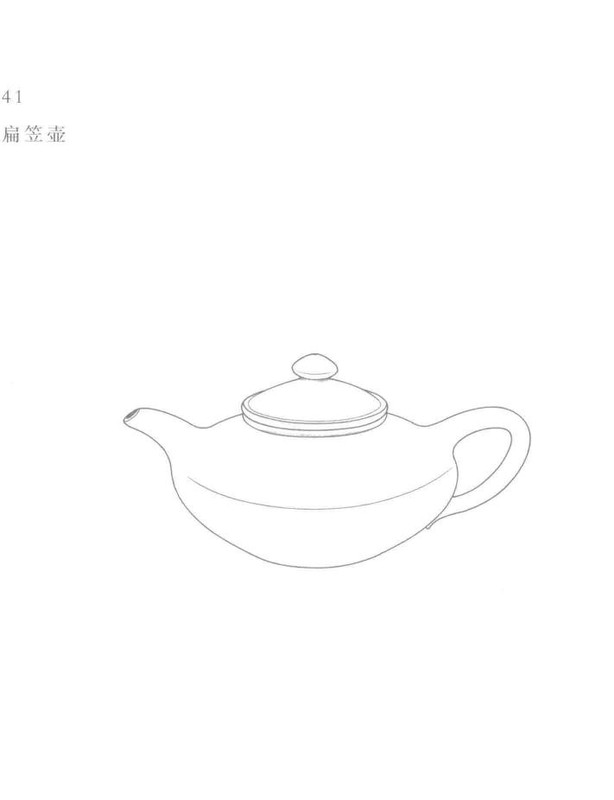
The teapot’s body echoes the gentle dome of the hat’s crown, while the lid sits low and flat, mimicking the hat’s broad brim. This isn’t mere mimicry—it’s thoughtful translation. The potter must understand how the hat’s form can be reimagined in clay while maintaining the structural integrity needed for a functional teapot. The spout curves outward with confidence, the handle arches with just the right amount of tension, and the overall proportions create a sense of grounded stability.
What makes this design particularly special is its timelessness. Unlike some Yixing forms that reflect specific historical periods or artistic movements, the Bian Li Hu feels almost eternal. It could have been made three hundred years ago or last week, and it would feel equally at home in either era. This quality of transcending time is what elevates certain designs to “classic” status.
The Visual Poetry of Form
When you hold a well-crafted Bian Li Hu, several design elements immediately reveal themselves. The body typically features a compressed, oblate spheroid shape—imagine a sphere that’s been gently pressed from top and bottom. This creates a pot that’s wider than it is tall, giving it a low center of gravity and a reassuring heft when filled with tea.
The lid is where the hat metaphor becomes most apparent. It sits nearly flush with the pot’s rim, extending outward in a gentle flange that recalls the hat’s protective brim. Some variations feature a subtle upward curve at the lid’s edge, while others maintain a perfectly flat plane. The knob—the small handle atop the lid—is usually understated, often taking the form of a simple button or a tiny bridge. This restraint is intentional; the lid itself is the star, and an oversized knob would disrupt the design’s horizontal emphasis.
The spout on a Bian Li Hu tends to be relatively short and slightly curved, emerging from the body at a natural angle that ensures smooth pouring without drips. Master potters pay particular attention to the spout’s interior channel, ensuring it’s wide enough for good flow but shaped to create a clean cutoff when you finish pouring. The handle typically forms a generous loop, positioned to balance the pot’s weight perfectly when lifted. On the finest examples, you’ll notice that the handle’s curve echoes the dome of the body—nothing is arbitrary in classical Yixing design.
The foot (the base of the pot) is usually a simple ring, just substantial enough to lift the body slightly off the table. This creates a shadow line that enhances the pot’s visual lightness despite its solid construction. Some potters add subtle decorative elements—perhaps a band of incised lines around the body’s widest point, or a delicate texture on the handle—but the Bian Li Hu generally favors restraint over ornamentation.
Clay, Color, and Character
Traditional Bian Li Hu teapots are crafted from Yixing’s famous zisha clay, which comes in several natural varieties. The most common is zini (purple clay), which fires to rich tones ranging from deep burgundy to chocolate brown. There’s also zhuni (red clay), which produces warmer, reddish-orange hues, and duanni (yellow clay), which yields colors from pale beige to golden tan.
The clay itself is what makes Yixing teapots legendary among tea enthusiasts. Zisha is uniquely porous, with a microscopic structure that allows the pot to “breathe” while remaining watertight. This porosity serves several functions: it helps regulate temperature during brewing, absorbs trace amounts of tea oils over time (seasoning the pot), and creates a slightly different texture in the brewed tea compared to porcelain or glass.
A well-made Bian Li Hu will show the clay’s natural character. The surface might be polished to a subtle sheen, or left with a slightly sandy texture that invites touch. You shouldn’t see glaze—authentic Yixing pottery is unglazed, allowing the clay’s inherent properties to shine through. Over years of use, the pot will develop a patina, a gentle luster that comes from repeated contact with tea and hands. This aging process is treasured by collectors; a well-seasoned pot is considered more valuable than a new one.
Historical Roots and Evolution
While we can’t pinpoint the exact moment the Bian Li Hu design first appeared, it belongs to a tradition of Yixing pottery that stretches back to the Ming Dynasty (1368-1644). This was when Yixing teapots began their transformation from utilitarian vessels to objects of artistic appreciation. Scholars and literati of the period started commissioning custom teapots, and potters responded by developing increasingly sophisticated forms.
The Bian Li Hu likely emerged during this creative flowering, when potters were looking to nature and everyday life for inspiration. The bamboo hat was ubiquitous in Chinese society—worn by farmers, fishermen, travelers, and even scholars seeking rustic simplicity. By transforming this common object into a teapot, the potter made a statement about finding nobility in humble origins, a very Daoist and Confucian concept.
Throughout the Qing Dynasty (1644-1912) and into the modern era, the Bian Li Hu has remained in continuous production. Different master potters have left their mark on the form, introducing subtle variations while respecting the core design. Some versions are more compressed, others slightly taller. Some feature more pronounced lid flanges, others keep everything minimal. This evolution within tradition is characteristic of Chinese craft—honoring the past while allowing for individual expression.
Tea Pairing: Finding the Perfect Match
One of the most common questions tea enthusiasts ask is: “Which teas work best with a Bian Li Hu?” The answer depends partly on the clay type, but the pot’s shape also plays a role.
The Bian Li Hu’s relatively wide, flat body creates a large surface area for tea leaves to unfurl. This makes it particularly well-suited for teas that need room to expand—think of rolled oolongs like Tieguanyin or Dong Ding, which can triple in size when steeped. The shape also promotes even heat distribution, which is crucial for teas that require precise temperature control.
For purple clay (zini) Bian Li Hu: These work beautifully with darker oolongs, aged white teas, and ripe pu-erh. The clay’s neutral character won’t interfere with these teas’ complex flavors, while its heat retention helps maintain the higher temperatures these teas prefer. A zini Bian Li Hu is also excellent for roasted oolongs, where the pot’s warmth helps release those toasty, caramelized notes.
For red clay (zhuni) Bian Li Hu: The finer, denser structure of zhuni makes it ideal for more delicate teas. Try it with high-mountain oolongs, green oolongs like Baozhong, or even high-quality green teas. Zhuni heats up quickly and cools down quickly, giving you more control over steeping times. The clay also tends to enhance aromatic qualities, making fragrant teas sing.
For yellow clay (duanni) Bian Li Hu: This versatile clay sits somewhere between zini and zhuni in terms of density and heat retention. It’s a great all-rounder, working well with raw pu-erh, white teas, lighter oolongs, and even black teas. Many tea enthusiasts choose duanni for their first Yixing pot because of this versatility.
The Bian Li Hu’s capacity typically ranges from 150ml to 250ml, making it perfect for solo sessions or intimate gatherings of two or three people. This size range is ideal for gongfu-style brewing, where you make multiple short infusions rather than one long steep.
Brewing Wisdom: Getting the Most from Your Bian Li Hu
If you’re new to Yixing teapots, the Bian Li Hu is an excellent introduction. Its forgiving shape and balanced proportions make it easier to use than some more specialized forms. Here’s how to get the best results:
Seasoning your pot: Before first use, rinse the pot with hot water several times to remove any clay dust. Then brew several pots of the tea you plan to dedicate it to (yes, you should use your Yixing pot for only one type of tea—or at least one category). Discard these first brews; you’re seasoning the pot, not drinking the tea. This process helps the clay absorb the tea’s character.
Temperature matters: The Bian Li Hu’s shape means it holds heat well but not excessively. For oolongs and pu-erh, use fully boiling water. For more delicate teas, let the water cool for 30-60 seconds after boiling. The pot itself will moderate the temperature slightly.
Filling technique: Don’t fill the pot to the absolute brim. Leave about a centimeter of space below the lid’s rim. This prevents overflow when you place the lid and allows the tea to move freely during steeping.
Pouring practice: The Bian Li Hu’s spout should pour cleanly without dripping if it’s well-made. Tilt the pot decisively—hesitant pouring often causes drips. Pour until the pot is completely empty; leaving tea sitting in the pot between infusions can make subsequent brews bitter.
Cleaning and care: After your tea session, empty the leaves and rinse the pot with hot water only—never use soap, which the porous clay will absorb. Leave the lid off and let the pot air dry completely before storing. Some enthusiasts gently wipe the exterior with a soft tea cloth after each use, which gradually builds that prized patina.
The one-tea rule: This is worth emphasizing. Yixing clay absorbs tea oils and flavors over time, which is part of its charm. But this means you shouldn’t brew green tea in your oolong pot, or switch between black tea and white tea. Choose your tea type and stick with it. Your pot will reward this loyalty by enhancing that tea’s character over months and years of use.
Why the Bian Li Hu Endures
In a world of constantly changing trends, the Bian Li Hu’s continued popularity speaks to something fundamental about good design. It’s not flashy or attention-seeking. It doesn’t rely on novelty or shock value. Instead, it offers something more enduring: proportion, balance, and a quiet confidence that comes from centuries of refinement.
When you brew tea in a Bian Li Hu, you’re participating in a tradition that connects you to countless tea drinkers across time. The farmer who inspired the original design, the potter who shaped the clay, the tea master who perfected the brewing technique—they’re all present in that moment when you lift the pot and pour.
This is what makes classical Yixing designs like the Bian Li Hu more than just teapots. They’re vessels of culture, carriers of wisdom, and daily reminders that beauty doesn’t need to shout to be heard. In our fast-paced modern world, there’s something deeply satisfying about using an object whose essential form has remained unchanged for generations.
Whether you’re a seasoned tea enthusiast or just beginning to explore the world of gongfu brewing, a Bian Li Hu offers an entry point into a richer, more mindful way of experiencing tea. It asks you to slow down, to pay attention, to appreciate the subtle interplay of clay, water, and leaf. And in doing so, it transforms the simple act of making tea into something approaching meditation.
The next time you see a Bian Li Hu, take a moment to appreciate its quiet elegance. Notice how the lid echoes that ancient traveler’s hat. Feel the weight of tradition in your hand. And then brew yourself a pot of tea, knowing that you’re part of a story that stretches back through centuries—a story that continues with each pour, each sip, each moment of presence and appreciation.