华颖壶
Explore this classic Yixing pottery design and its significance in tea culture
The Hua Ying Hu (华颖壶): A Timeless Expression of Yixing Elegance
When you hold a well-crafted Yixing teapot in your hands, you’re not just touching clay—you’re connecting with centuries of tea culture, artistic refinement, and the quiet philosophy that a perfect cup of tea begins long before water meets leaf. The Hua Ying Hu, whose name translates roughly to “Flowering Excellence Pot” or “Brilliant Blossom Pot,” embodies this philosophy with understated grace.
This classic design represents everything that makes Yixing pottery so revered among tea enthusiasts: balanced proportions, thoughtful craftsmanship, and a form that serves function as beautifully as it pleases the eye. While many Yixing designs shout their presence with dramatic curves or elaborate decorations, the Hua Ying Hu speaks in a quieter voice—one that rewards patient observation and daily use.
A Design Rooted in Classical Principles
The Hua Ying Hu belongs to the rich tradition of classical Yixing teapot designs, those forms that have been refined over generations until every curve and angle serves both aesthetic and practical purposes. Unlike modern experimental pieces or novelty designs shaped like fruits or animals, classical pots like the Hua Ying Hu follow principles established during the Ming and Qing dynasties, when Yixing pottery reached its artistic zenith.
What makes this design “classical” isn’t just its age or traditional appearance—it’s the way it balances competing demands. A teapot must pour cleanly without dripping. It must sit comfortably in the hand. The lid should fit snugly but not too tightly. The spout must deliver water in a controlled arc. The handle needs to stay cool enough to grasp even when filled with boiling water. Achieving all these qualities while creating something beautiful to behold is the mark of a truly refined design.
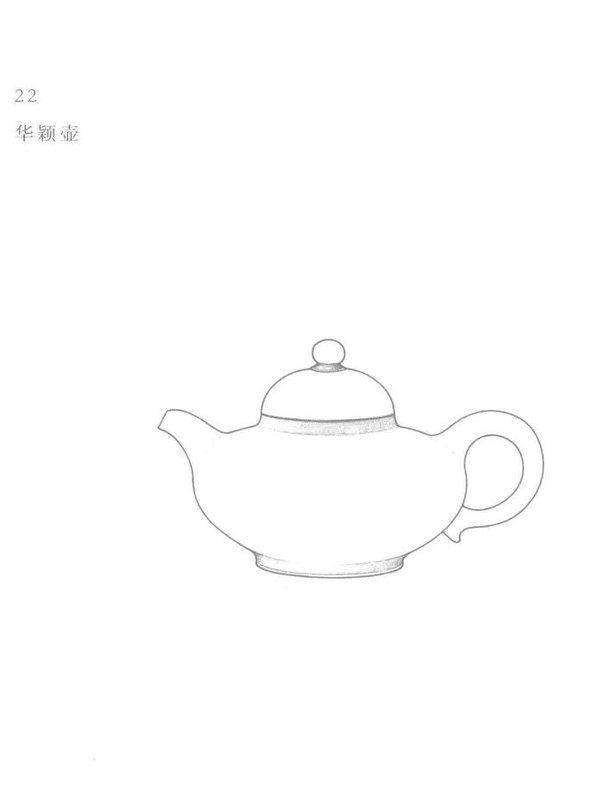
The Hua Ying Hu accomplishes this through proportions that feel inevitable once you see them, yet required generations of potters to perfect. The body typically features gentle curves that suggest fullness without appearing heavy. The spout extends with purpose, neither too short to pour properly nor so long it becomes fragile or unbalanced. The handle arches in a way that accommodates different hand sizes while maintaining visual harmony with the overall form.
Visual Characteristics That Reward Close Attention
At first glance, the Hua Ying Hu might seem simple, even plain compared to more ornate Yixing designs. This simplicity is deceptive. Spend time with one of these pots, and you’ll begin noticing subtle details that reveal the maker’s skill and the design’s sophistication.
The body often features a rounded yet slightly squared profile—not quite spherical, not quite angular, but something in between that creates visual interest through restraint. This shape isn’t arbitrary; it maximizes the interior volume for tea leaves to unfurl while maintaining a compact footprint on your tea table. The walls typically have a gentle taper, slightly wider at the shoulder than at the base, which helps with heat retention and gives the pot a sense of stability.
Look closely at where the spout meets the body, and you’ll see how seamlessly they integrate. In lesser pots, this junction often appears crude or forced. In a well-executed Hua Ying Hu, the transition flows naturally, as if the spout grew from the body rather than being attached to it. The same attention appears where the handle joins—no awkward gaps or rough edges, just smooth integration that speaks to careful craftsmanship.
The lid deserves special attention. Classical Yixing designs often feature lids that fit with remarkable precision, and the Hua Ying Hu continues this tradition. When you lift the lid, you might hear a subtle whisper of air—the sound of a well-fitted seal. This isn’t just for show; a properly fitted lid helps regulate temperature and prevents heat from escaping too quickly during brewing.
Many Hua Ying Hu pots feature a bridge-style lid handle, a small arched element that’s easy to grasp and stays relatively cool during use. Some versions include subtle decorative elements on the lid—perhaps a small knob shaped like a flower bud or fruit, a nod to the “flowering” or “brilliant” aspect of the pot’s name. These touches add personality without overwhelming the design’s essential simplicity.
The clay itself tells part of the story. Authentic Yixing pottery uses zisha (purple sand) clay from the Yixing region, and the Hua Ying Hu showcases this material’s natural beauty. The surface might display the slightly grainy texture characteristic of quality zisha, with color variations ranging from deep reddish-brown to warm tan to rich purple-black, depending on the specific clay body used and firing conditions. Unlike glazed pottery, Yixing pieces celebrate the raw beauty of the clay, developing a subtle patina over time as tea oils season the surface.
Historical Context and Cultural Significance
Pinpointing the exact origins of the Hua Ying Hu design proves challenging, as is often the case with classical Yixing forms. These designs evolved organically over time, with different potters contributing refinements and variations. The name itself suggests connections to themes of excellence and natural beauty—concepts deeply embedded in Chinese aesthetic philosophy.
Yixing pottery’s golden age occurred during the Ming dynasty (1368-1644) and continued through the Qing dynasty (1644-1912). During these periods, tea culture flourished among scholars, artists, and the educated elite. Teapots became not just functional vessels but expressions of taste, refinement, and philosophical outlook. The literati—educated scholars who valued art, poetry, and tea—particularly prized Yixing pots for their ability to enhance tea’s flavor while embodying principles of natural beauty and understated elegance.
Classical designs like the Hua Ying Hu emerged from this cultural context. They reflect Daoist and Buddhist influences that valued simplicity, naturalness, and harmony with materials. Rather than imposing elaborate decoration onto the clay, potters sought to reveal the clay’s inherent qualities and create forms that felt inevitable and right.
The traditional craftsmanship involved in creating these pots deserves recognition. Authentic Yixing teapots are typically handmade using techniques passed down through generations. Potters shape the clay using wooden tools and their hands, building up the form piece by piece. This process requires years of training to master—understanding how the clay behaves, how much it will shrink during drying and firing, how to achieve consistent wall thickness, and how to create that perfect lid fit.
During the Cultural Revolution (1966-1976), traditional crafts including Yixing pottery suffered significant disruption. Many skilled potters were forced to abandon their work, and knowledge transmission was interrupted. The revival of interest in traditional Yixing pottery in recent decades has brought renewed appreciation for classical designs like the Hua Ying Hu, though it has also led to challenges in distinguishing authentic handmade pieces from mass-produced imitations.
Tea Pairing: Finding the Perfect Match
One of Yixing pottery’s most celebrated qualities is how different clay bodies and pot shapes suit different types of tea. The porous nature of unglazed zisha clay absorbs tea oils over time, gradually developing a seasoning that can enhance subsequent brews. This means serious tea enthusiasts often dedicate specific pots to specific tea types.
The Hua Ying Hu’s balanced, medium-sized form makes it remarkably versatile, though certain teas particularly shine when brewed in this style of pot.
Oolong Teas: The Hua Ying Hu excels with oolong teas, especially traditional varieties like Tie Guan Yin, Da Hong Pao, or Taiwanese high-mountain oolongs. The pot’s shape provides adequate room for oolong leaves to expand fully—these teas often unfurl dramatically when steeped, and cramped quarters can restrict this process. The clay’s heat retention helps maintain the consistent temperatures that bring out oolong’s complex flavor profiles, from floral and fruity notes to deeper roasted or mineral characteristics.
Aged Teas: If you’re working with aged oolongs, aged white teas, or ripe pu-erh, the Hua Ying Hu’s traditional form complements these teas’ depth and complexity. The clay’s breathability can help soften any rough edges in the tea while allowing its mature, mellow qualities to shine. The pot’s heat retention is particularly valuable for pu-erh, which often benefits from sustained high temperatures.
Black Teas: Chinese black teas (called “red tea” in Chinese) like Dian Hong, Keemun, or Lapsang Souchong work beautifully in this pot style. The clay’s interaction with black tea can round out tannins and emphasize sweetness, while the pot’s shape allows for proper leaf expansion and water circulation.
What to Avoid: Generally, you’ll want to avoid using your Hua Ying Hu for green teas or delicate white teas. These teas typically require lower brewing temperatures and shorter steeping times, and the heat retention that benefits oolongs and black teas can cause green teas to become bitter or lose their fresh, delicate character. Additionally, the strong flavors of heavily roasted or fermented teas can season the pot in ways that might overwhelm more subtle teas later.
Practical Brewing Advice for Your Hua Ying Hu
Owning a Hua Ying Hu—or any quality Yixing pot—is the beginning of a relationship that deepens over time. Here’s how to get the most from your pot:
Initial Preparation: When you first acquire your pot, give it a proper introduction to its purpose. Rinse it thoroughly with hot water to remove any dust from storage or shipping. Some enthusiasts recommend a more elaborate “opening” ceremony: place the pot in a large vessel of water with some tea leaves (the type you plan to brew in it), bring to a gentle simmer for 30 minutes, then let it cool naturally. This process helps remove any residual clay taste and begins the seasoning process. However, a simpler approach—just brewing tea in it repeatedly—works fine too.
Water Temperature: For oolongs and black teas, use water just off the boil (around 195-205°F or 90-96°C). Preheat your pot by filling it with hot water, letting it sit for a minute, then discarding the water before adding your tea leaves. This preheating step is crucial—it prevents the pot from absorbing too much heat from your brewing water, which would lower the temperature and affect extraction.
Tea-to-Water Ratio: A medium-sized Hua Ying Hu typically holds between 150-250ml of water. For gongfu-style brewing (multiple short infusions), use approximately 5-7 grams of tea for a 150ml pot, adjusting based on the tea’s density and your taste preferences. The pot should be about one-third to one-half full of dry leaves.
Brewing Technique: Pour water in a circular motion to ensure all leaves get evenly wetted. Fill the pot until water just reaches the base of the spout opening—overfilling can cause dripping. Place the lid on immediately to trap heat and aroma. For the first infusion, pour out after 20-30 seconds for most oolongs, adjusting based on the specific tea and your taste. Subsequent infusions can gradually increase in time.
Pouring: A well-designed Hua Ying Hu should pour cleanly with a steady stream. Hold the pot so your thumb rests on the lid (to keep it from falling off) while your fingers grip the handle. Pour decisively—hesitant pouring often leads to dripping. The pot should cut off cleanly when you return it to upright position, with no dribbling down the spout.
Cleaning and Care: After your tea session, empty the leaves and rinse the pot thoroughly with hot water—no soap, ever. Soap can be absorbed by the porous clay and affect future brews. Let the pot air dry completely with the lid off before storing. Some tea staining inside is normal and even desirable; this is the patina developing. However, wipe the exterior gently with a soft cloth to prevent uneven staining or buildup.
Seasoning Over Time: As you use your pot repeatedly with the same type of tea, it will develop a seasoning that can subtly enhance that tea’s flavor. This is why dedicated tea enthusiasts often own multiple Yixing pots for different tea categories. The seasoning process is gradual—don’t expect dramatic changes after a few uses, but over months and years, you’ll notice your pot becoming an increasingly perfect partner for your chosen tea.
Storage: Store your pot in a place with good air circulation, away from strong odors (kitchens can be problematic). Never store it with the lid sealed on, as this can trap moisture and lead to musty smells or even mold.
Why the Hua Ying Hu Matters Today
In our age of convenience and disposability, there’s something profoundly satisfying about using a tool that improves with age and use. The Hua Ying Hu represents an alternative approach to material culture—one where objects are meant to last, to develop character, to become more valuable through the relationship you build with them.
This pot won’t make bad tea good, but it will help good tea reach its potential. More importantly, it invites you to slow down, to pay attention, to engage in the small ritual of tea preparation with mindfulness and care. In a world that constantly demands our attention and rushes us forward, the simple act of brewing tea in a beautiful pot becomes a form of resistance—a declaration that some things are worth doing slowly and well.
The Hua Ying Hu’s classical design has endured because it works—functionally, aesthetically, and philosophically. It doesn’t chase trends or demand attention. It simply does its job with quiet excellence, day after day, pot after pot, gradually becoming more itself as it absorbs the history of all the tea you’ve shared together.
Whether you’re just beginning your journey into Yixing pottery or adding to an established collection, the Hua Ying Hu offers a masterclass in how simplicity, when executed with skill and understanding, becomes its own form of sophistication. It’s a pot that grows with you, that rewards attention, and that makes every tea session a little more special—not through flashiness or novelty, but through the timeless appeal of something made right.