四方侧角壶
Explore this classic Yixing pottery design and its significance in tea culture
The Four-Sided Angular Teapot: A Geometric Marvel in Yixing Pottery
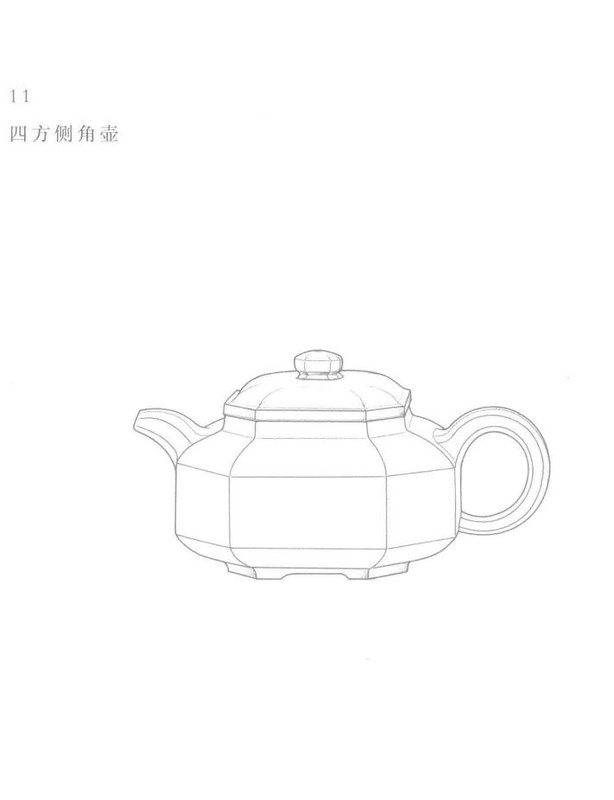
When most people picture a traditional Chinese teapot, they imagine soft curves and rounded forms that echo the organic shapes found in nature. But the 四方侧角壶 (Sìfāng Cèjiǎo Hú)—which we might call the “Four-Sided Angular Teapot” in English—takes a completely different approach. This striking design embraces geometry, precision, and architectural thinking, creating a teapot that looks as much like a carefully constructed building as it does a vessel for brewing tea.
In the world of Yixing pottery, where purple clay has been shaped into tea vessels for centuries, this angular design stands as a testament to the versatility and technical mastery of Chinese ceramic artists. It’s a pot that demands attention, challenges conventions, and ultimately delivers an exceptional tea experience wrapped in an unexpectedly modern-looking package.
A Study in Angles and Edges
The first time you encounter a 四方侧角壶, you might do a double take. Unlike the flowing, naturalistic forms that dominate much of Yixing’s pottery tradition, this teapot is all about clean lines, sharp angles, and geometric precision. The body typically features four distinct sides that meet at crisp edges, creating a square or rectangular profile when viewed from above.
But here’s where it gets interesting: those sides aren’t simply flat panels slapped together. Each face of the pot often features subtle curves or gentle slopes that catch the light differently throughout the day. The “侧角” (cèjiǎo) part of the name—meaning “side angles”—refers to how these planes intersect, creating a dynamic interplay of surfaces that gives the pot a sense of movement despite its structured form.
The spout on these pots tends to follow the angular theme, often emerging from the body in a straight, decisive line rather than the curved arc you’d see on rounder designs. The handle, too, typically maintains this geometric sensibility, though skilled artisans know exactly where to introduce subtle curves to ensure the pot remains comfortable to hold and pour.
What really sets this design apart is how it plays with negative space. The angular body creates distinct shadow lines that shift as you move around the pot or as the light changes. It’s almost sculptural in nature—a functional object that doubles as a piece of three-dimensional art on your tea table.
Roots in Traditional Craftsmanship
While the exact origins of the 四方侧角壶 design are somewhat mysterious—as is often the case with traditional Yixing forms that evolved over generations—we know that angular teapots have been part of the Yixing repertoire for centuries. These geometric designs likely emerged during periods when Chinese aesthetics were particularly influenced by architectural thinking and the philosophical appreciation for order and structure.
Creating a truly excellent angular teapot requires a completely different skill set than making rounded forms. When you’re working with curves, the clay is somewhat forgiving—small irregularities can blend into the overall form. But with angular designs, every edge must be crisp, every plane must be true, and every corner must meet with precision. There’s nowhere to hide imperfections.
Traditional Yixing artisans would construct these pots using the “piece-molding” technique, carefully joining individual slabs of clay to create the geometric body. The challenge lies in ensuring that the joints are invisible in the finished piece and that the walls maintain consistent thickness throughout. Too thick, and the pot becomes clunky and loses its thermal properties. Too thin, and structural integrity suffers.
The angular design also presents unique challenges during firing. Clay shrinks as it dries and fires, and with geometric forms, this shrinkage must be perfectly uniform to prevent warping. A pot that goes into the kiln with perfect 90-degree angles must emerge with those same angles intact—a feat that requires deep understanding of clay behavior and firing dynamics.
The Clay Makes the Difference
Like all authentic Yixing teapots, the 四方侧角壶 is crafted from the region’s famous purple clay, known as zisha (紫砂). But the angular design actually showcases certain qualities of this clay in unique ways.
Zisha clay has a slightly grainy texture that becomes more apparent on flat surfaces than on curved ones. When light hits the broad, flat sides of an angular teapot, you can often see the subtle texture of the clay more clearly, revealing the natural character of the material. This is particularly striking on unglazed pots, where the raw beauty of the fired clay takes center stage.
The clay’s famous porosity—which allows it to “breathe” and develop a patina over time—works just as effectively in angular forms as in rounded ones. In fact, some tea enthusiasts argue that the larger, flatter surfaces of angular pots develop their seasoned patina more evenly and visibly, creating a beautiful matte sheen that deepens with use.
Different clay colors can dramatically affect the appearance of angular teapots. A dark purple or black clay (often called “black zisha”) creates a sleek, almost contemporary look that wouldn’t seem out of place in a modern design museum. Lighter clays, like the reddish-brown hongni (红泥) or the pale duanni (段泥), soften the geometric severity and create a warmer, more approachable aesthetic.
Tea Pairing: Finding the Perfect Match
One of the most common questions tea enthusiasts ask about any Yixing pot is: “What tea should I brew in it?” With the 四方侧角壶, the answer depends partly on the specific clay used, but the angular design itself offers some interesting considerations.
Oolong teas are often an excellent match for angular Yixing pots. The structured, precise nature of the pot’s design seems to complement the complex, layered character of good oolongs. Taiwanese high-mountain oolongs, with their floral notes and clean finish, work particularly well. The pot’s ability to maintain consistent temperature across its flat surfaces helps these teas open up gradually and evenly.
Aged white teas also shine in angular pots. These teas benefit from the steady, even heat retention that the pot’s geometric design provides. The broad surfaces of the pot’s body absorb and radiate heat in a way that seems to coax out the mellow, sweet notes that develop in white tea over years of aging.
For raw puerh (sheng puerh), especially younger vintages with more aggressive characteristics, an angular pot can be an interesting choice. The pot’s design doesn’t soften or round out the tea’s edges the way a more curved pot might—instead, it presents the tea’s character more directly. This can be ideal if you want to really understand what a particular puerh is all about.
Black teas (what the Chinese call “red tea” or hongcha) can also work beautifully, particularly if you’re using a hongni clay pot. The combination of the clay’s natural sweetness and the pot’s efficient heat retention brings out the malty, full-bodied qualities of good black teas.
What you might want to avoid are extremely delicate green teas, which can be overwhelmed by the heat retention of Yixing clay in general. The angular design doesn’t change this fundamental characteristic of the material.
Brewing Techniques and Practical Considerations
Using a 四方侧角壶 follows the same basic principles as any Yixing teapot, but there are a few specific considerations worth noting.
Preheating is crucial. Because of the pot’s geometric design, heat distribution can be slightly less even than in a rounded pot if you don’t preheat properly. Pour boiling water into the pot, swirl it around to warm all the surfaces, then discard before adding your tea leaves. This simple step ensures that when you add your brewing water, the entire pot is at the right temperature.
Pay attention to the pour. Angular spouts can sometimes pour differently than curved ones. Many angular pots have excellent, precise pours with good cut-off (meaning the water stops cleanly when you tip the pot back upright, without dribbling). However, the angle of the spout means you might need to tip the pot slightly more than you would with a curved design to get the water flowing.
The handle matters. While angular handles look striking, make sure the one on your pot is comfortable to hold. The best angular teapots balance geometric aesthetics with ergonomic reality—the handle should still feel natural in your hand, even if it looks architectural.
Seasoning your pot works the same way as with any Yixing teapot. Dedicate it to one type of tea (or at least one category), and over time, the clay will absorb the tea’s oils and develop a patina. With angular pots, this patina often develops most noticeably on the flat surfaces and along the edges, creating a beautiful visual record of the pot’s use.
Cleaning is straightforward. The flat surfaces and accessible angles actually make these pots easier to clean than some more complex designs. Just rinse with hot water after each use—never use soap, which can be absorbed by the porous clay and affect future brews.
The Modern Appeal of Traditional Design
There’s something fascinating about how the 四方侧角壶 manages to look both ancient and contemporary at the same time. Place one of these pots on a traditional Chinese tea table, and it fits perfectly, its geometric precision echoing the structured aesthetics of classical Chinese design. But set the same pot in a minimalist modern space, and it looks equally at home, its clean lines and architectural form speaking to contemporary sensibilities.
This dual nature makes angular Yixing pots particularly appealing to tea enthusiasts who appreciate both tradition and modernity. You’re not choosing between old and new—you’re embracing a design that transcends both.
For collectors, angular pots offer unique display opportunities. Their geometric forms create interesting visual relationships when grouped with other tea ware, and their flat surfaces provide excellent canvases for any decorative elements the artist might choose to add—though many of the finest examples remain unadorned, letting the purity of form speak for itself.
Choosing Your Angular Teapot
If you’re considering adding a 四方侧角壶 to your tea collection, here are a few things to look for:
Precision of construction is paramount. Examine the edges where the sides meet—they should be crisp and clean, with no visible gaps or irregularities. The corners should be sharp (though not dangerously so), and all angles should appear consistent.
Balance and proportion matter tremendously in angular designs. The pot should look stable and grounded, not top-heavy or awkward. The spout, handle, and body should relate to each other harmoniously, even while maintaining their geometric character.
Quality of clay is always important with Yixing ware, but it’s particularly noticeable in angular designs where the clay’s texture and color are so prominently displayed. Look for clay with a natural, unforced appearance—avoid pots that look artificially colored or overly processed.
Functional excellence shouldn’t be sacrificed for aesthetics. The pot should pour well, feel comfortable to hold, and have a lid that fits snugly without being difficult to remove.
A Pot That Rewards Attention
The 四方侧角壶 isn’t for everyone, and that’s part of its charm. It’s a design that makes a statement, that asks you to reconsider your assumptions about what a teapot should look like. But for those who appreciate its geometric beauty and precise craftsmanship, it becomes more than just a brewing vessel—it’s a daily reminder that tradition and innovation aren’t opposites, but partners in the ongoing story of tea culture.
Every time you brew tea in an angular Yixing pot, you’re participating in a tradition that values both artistic expression and functional excellence. You’re using a tool that’s been refined over generations, yet still feels fresh and relevant today. And you’re experiencing your tea through a vessel that presents it honestly and directly, without unnecessary embellishment.
That’s the real magic of the 四方侧角壶—it strips away the superfluous and leaves you with pure form, pure function, and pure tea. In a world that often feels overly complicated, there’s something deeply satisfying about that simplicity.