At 2,000 Metres in Mengsong
A high garden day in Menghai’s Mengsong township, where tea grew through mixed forest and altitude became something more physical than a label.
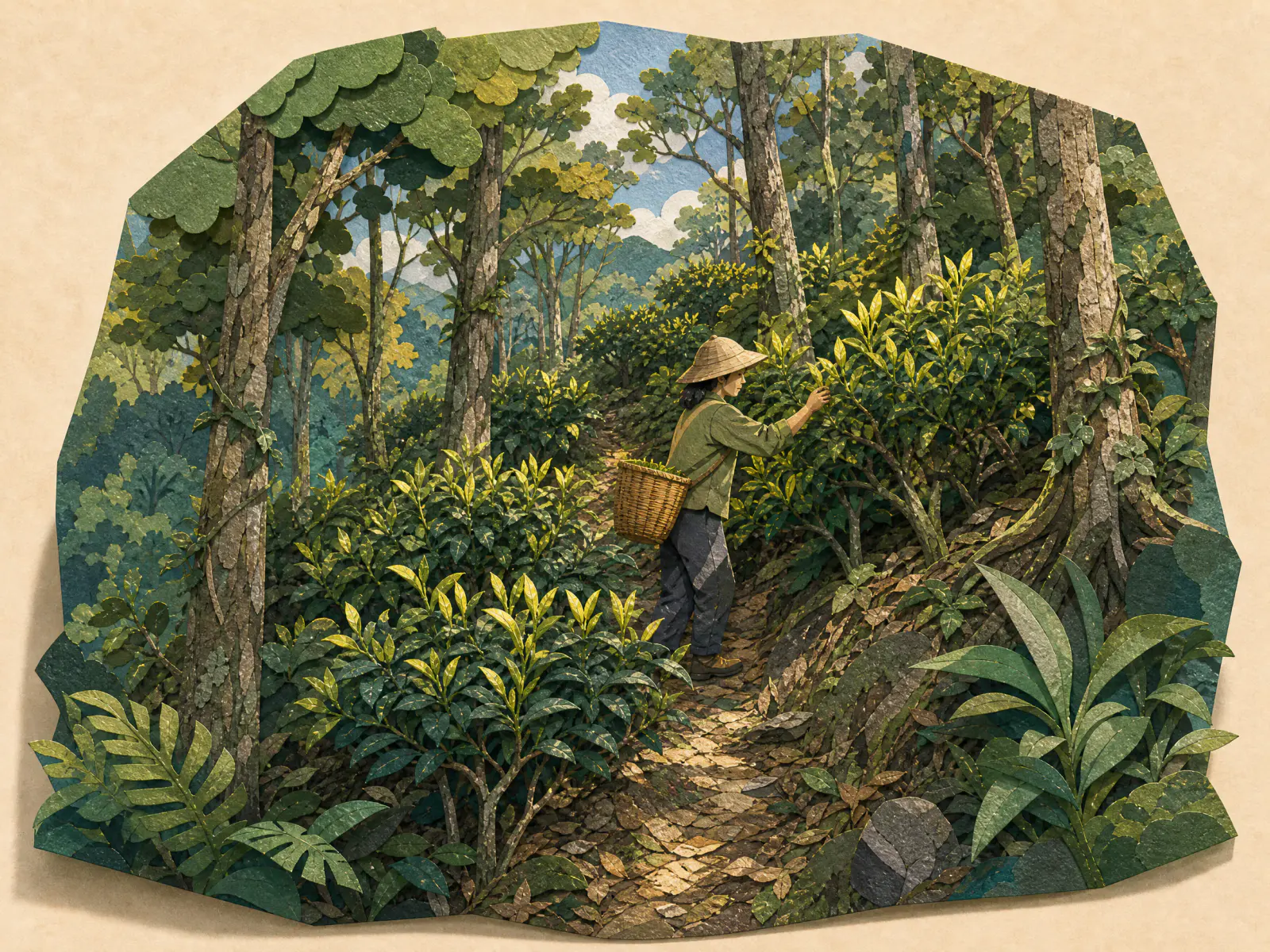
On the second morning in Menghai, the number that kept reappearing was 2,000.
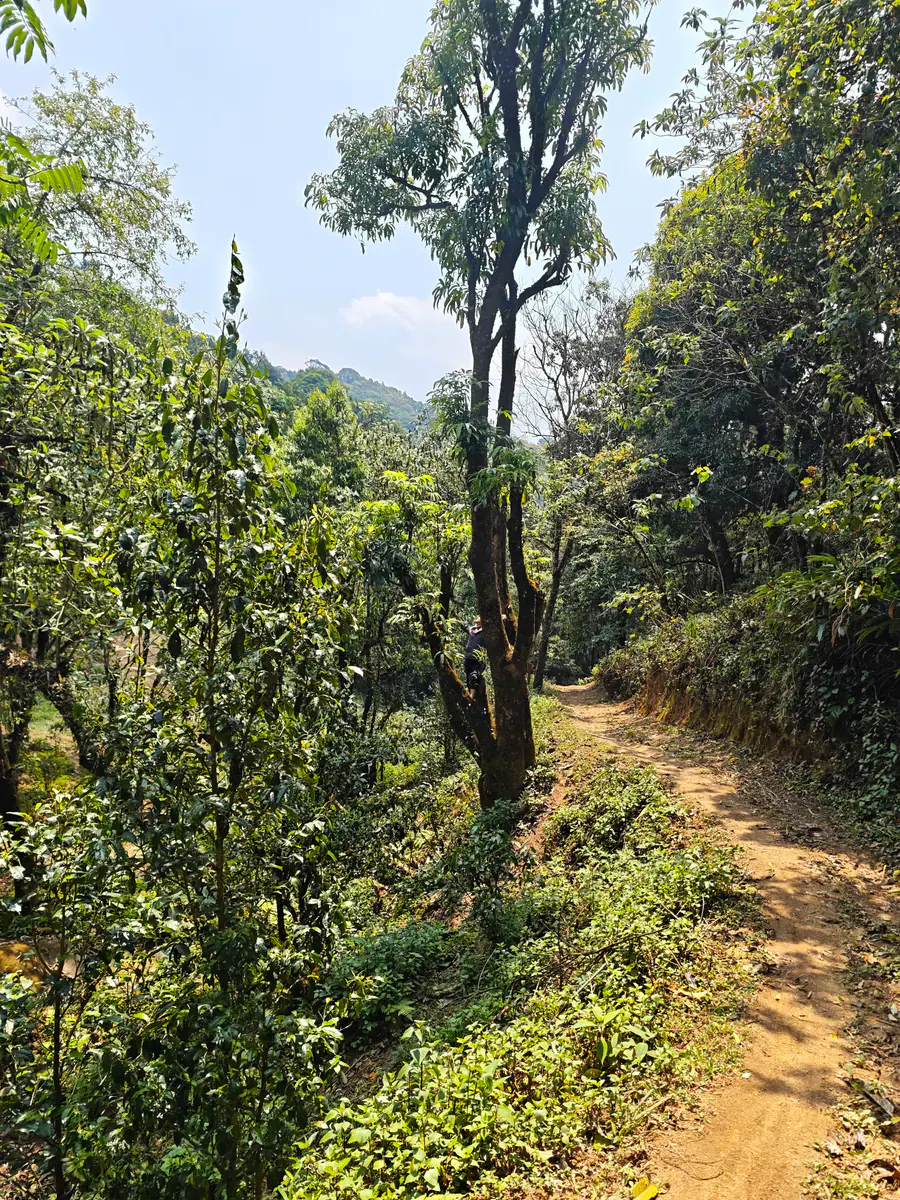
The phone recorded the first garden photographs at about 1,935 metres. As the path climbed, later frames reached 2,050 and briefly 2,071. Altitude is one of the easiest facts to print on a tea wrapper and one of the least interesting until you have to walk it.
Tea inside a larger forest
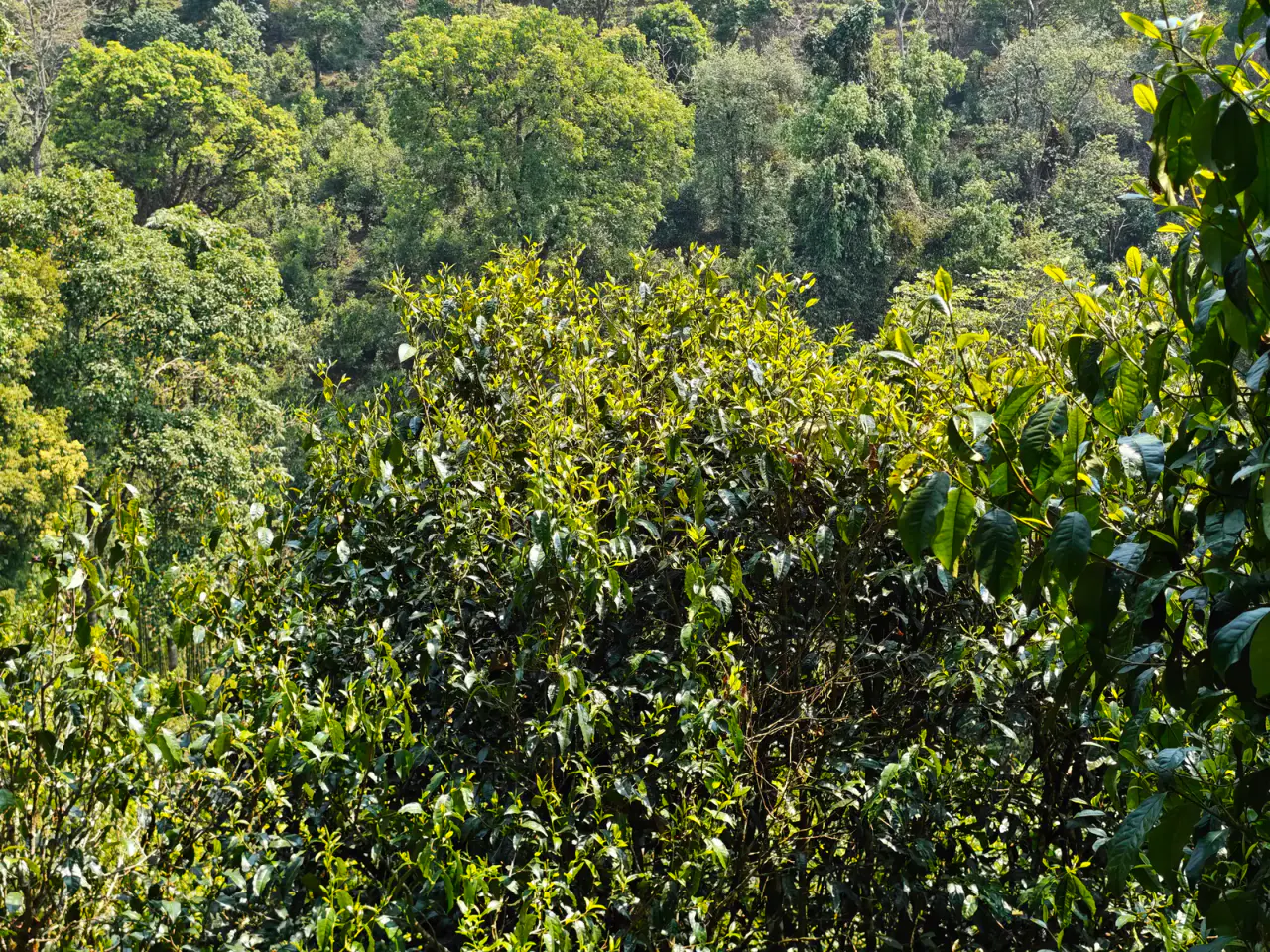
This garden did not offer a clean horizon of identical tea bushes. Tea occupied the foreground, but the frame kept opening into taller trees, vines and uneven canopy. Some tea plants were easy to distinguish. Others disappeared into the same green as the forest around them.
That visual difference matters. “Forest tea” is used so freely that it can become mood rather than information. Here the useful evidence was ordinary: mixed species, irregular spacing, leaf litter, shade that changed every few metres and paths shaped around existing trees.
None of this proves that a tea is old, pesticide-free or better in the cup. Ecology should not be used as a substitute for those claims. It does show that the garden is not a conventional open plantation, and it helps explain why harvesting here cannot be treated as a uniform industrial operation.
New growth in hard light
The spring growth was bright enough to look almost yellow against the older leaves. In close photographs, fresh shoots rose above darker, mature foliage. In wider photographs, the same shoots nearly vanished into the hillside.
That change in scale is useful. A buyer sees finished maocha, where leaf has already been heated, rolled, dried and mixed. A picker sees individual shoots distributed across plants of different heights and shapes. “One batch” begins as hundreds of small decisions made across a slope.
Altitude did not tell the whole story
It is tempting to use the phone’s highest reading as the headline and stop there. Higher sounds rarer. Rarer sounds better. The garden itself made that logic feel incomplete.
Elevation changes temperature and growth rate, but aspect, shade, soil moisture, tree condition, picking time and processing still travel with the leaf. Two plants at the same altitude can occupy very different pockets of light and water. A precise number can give a vague claim false authority.
The responsible note from this visit is therefore narrow: these photographs document tea gardens in Mengsong township at high elevation. They do not establish a named micro-origin, tree age or flavour profile. Those would need a field label, a known producer lot and a tasting record tied to the same material.
From garden to drying terrace
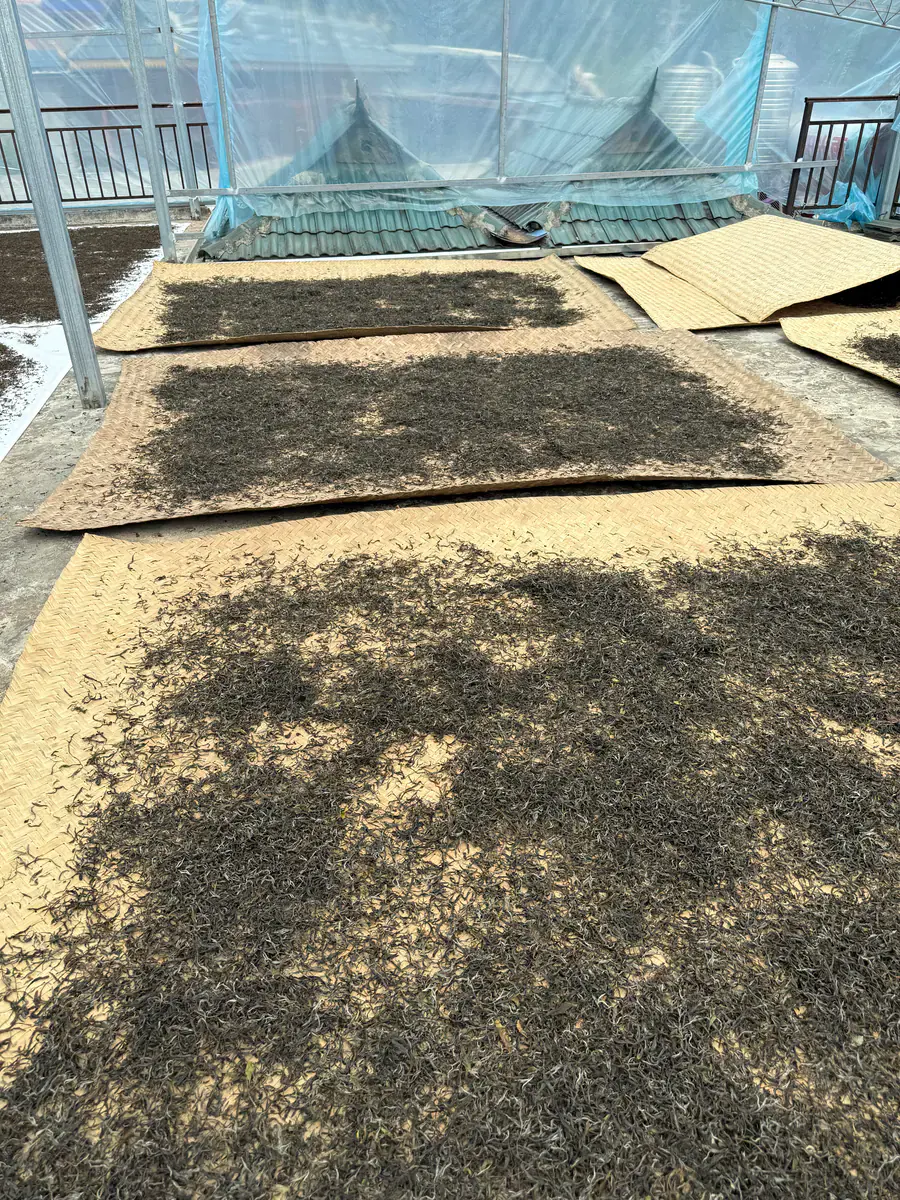
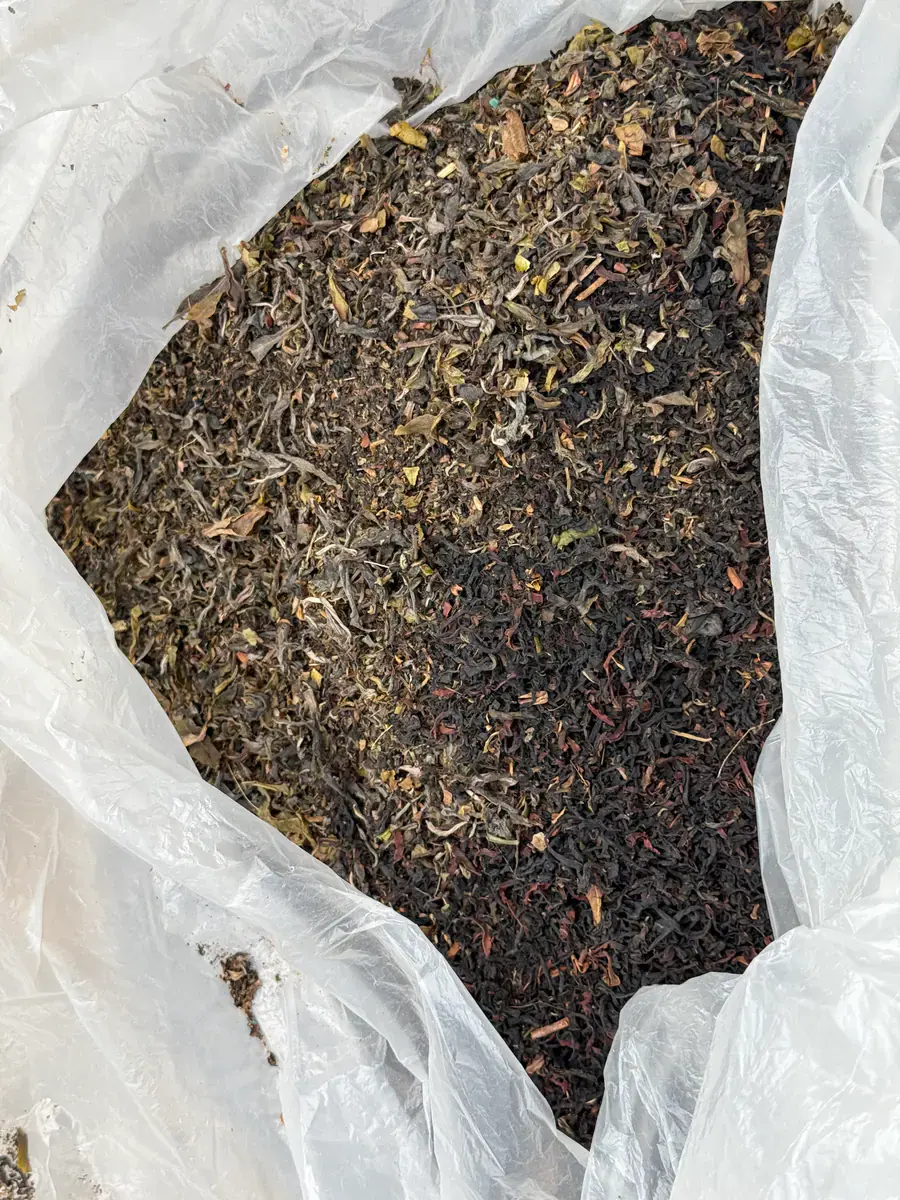
The day’s final images moved from living plants to processed leaf. Tea covered large mats on a sunny terrace. Later, a bag of dark, loose maocha sat open for inspection.
This is where the forest becomes difficult to read. The finished leaf still carries clues—size, colour, stem, rolling, evenness—but the spatial arrangement has vanished. The path, shade and altitude are no longer visible. Provenance has to survive as documentation and trust.
The most useful souvenir from Mengsong was not the highest GPS number. It was the before-and-after sequence: a complicated garden becoming a portable bag of tea. The first contained more information than anyone could easily summarise. The second could be moved, mixed, renamed and sold.
Next: From Guafengzhai to the River Road.
Quick answers
Frequently asked questions
Where is Mengsong tea grown?
This field note concerns Mengsong Township in Menghai County, Xishuangbanna. Other places share similar romanised names, so the county and Chinese place name matter when reading a label.
Does high elevation guarantee better tea?
No. Elevation shapes temperature and growing conditions, but garden management, plant material, season, picking and processing also affect quality. A number on a listing is not a grade.
What was most noticeable in the Mengsong garden?
Tea grew within a larger mixed landscape rather than as an isolated scenic tree. The visit connected new growth and difficult terrain with the work of moving fresh leaf quickly to processing.