From Guafengzhai to the River Road
Two days around Yiwu: Guafengzhai’s village gate, a forest road that turned into a stream, and fresh leaf still being processed late at night.
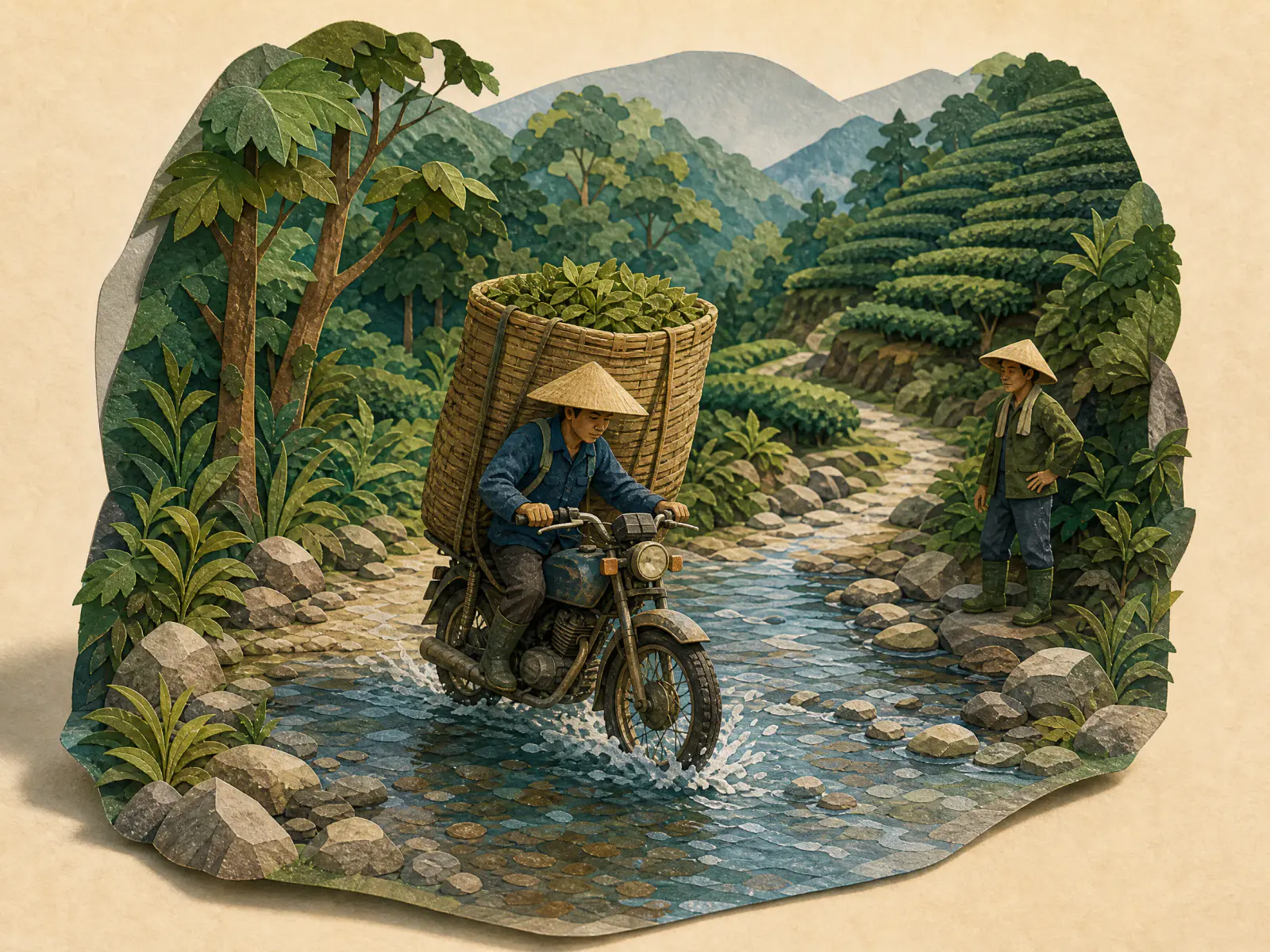
Guafengzhai has two entrances. The first is a gate. The second is distance.
We reached the village on 3 April after crossing east from Menghai. Road works slowed the drive before Yiwu; the later camera cluster moved through Yiwu town and then landed directly at Guafengzhai, close to the Laos border. The village gate carried the name in large gold characters. Behind it, forest climbed in every direction.
The next morning the route shifted south, toward the Huanglianshan area. This matters because the photographs should not all be labelled Guafengzhai simply because it is the famous name from the previous day. The GPS record says the stream, valley and processing sequence belong to a different cluster.
The named place
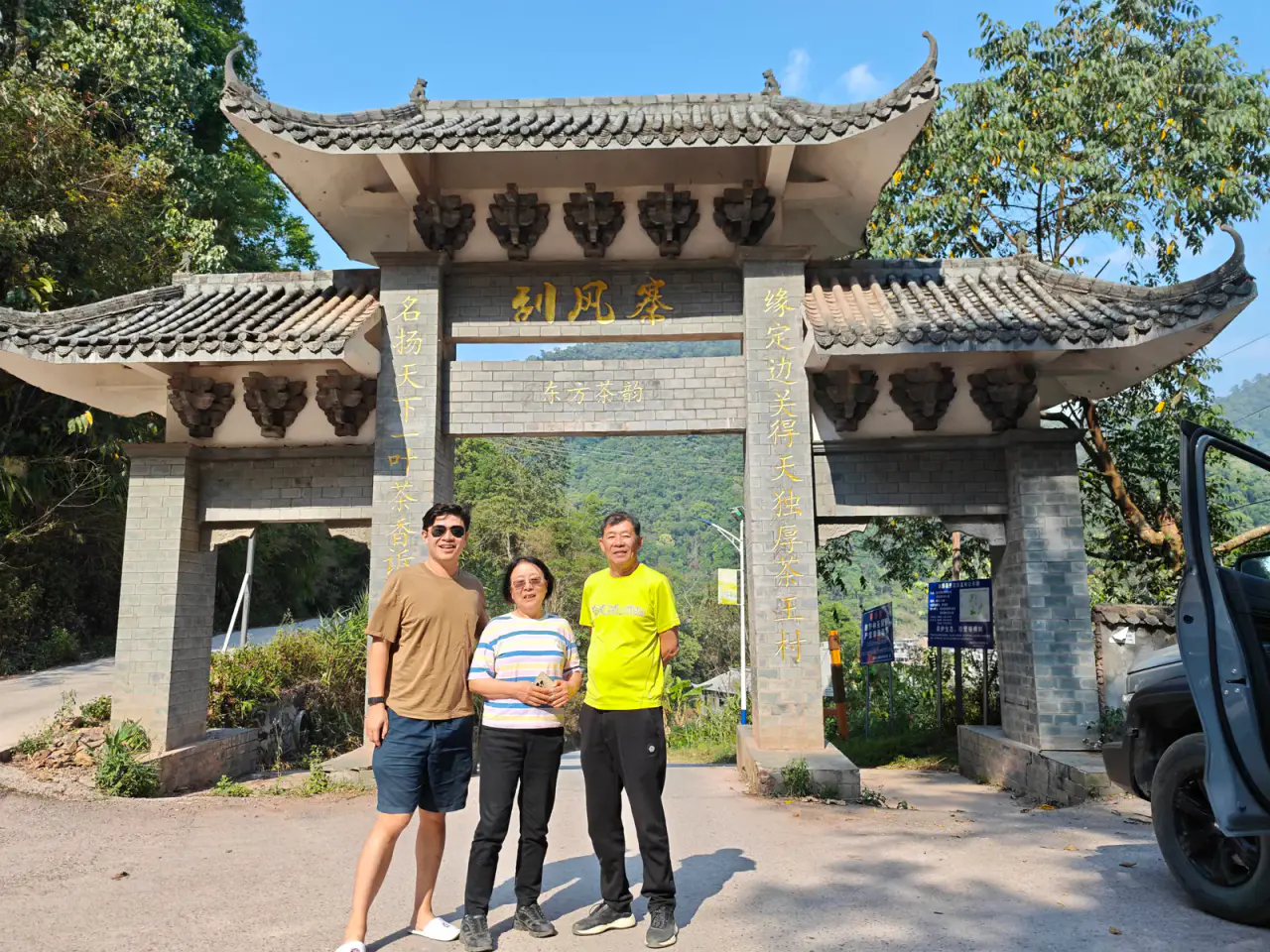
Guafengzhai is usually presented through superlatives: remote, forested, scarce, old. The gate photograph is quieter. Three people stand in hard afternoon light. A vehicle is still half in the frame. Road signs and a small map sit behind them.
That ordinary clutter makes the image useful. Guafengzhai is not outside the modern tea economy. Roads, vehicles, tourism, local processing and famous-origin branding have all reached it. Remoteness is real, but it should not be romanticised into isolation.
The visit continued through the village: homes, processing spaces, tea cakes on shelves, a meal, people talking. The forest was never far away, yet the village itself was a place of exchange. Tea did not simply leave the trees; it passed through rooms and relationships.
When the road became water
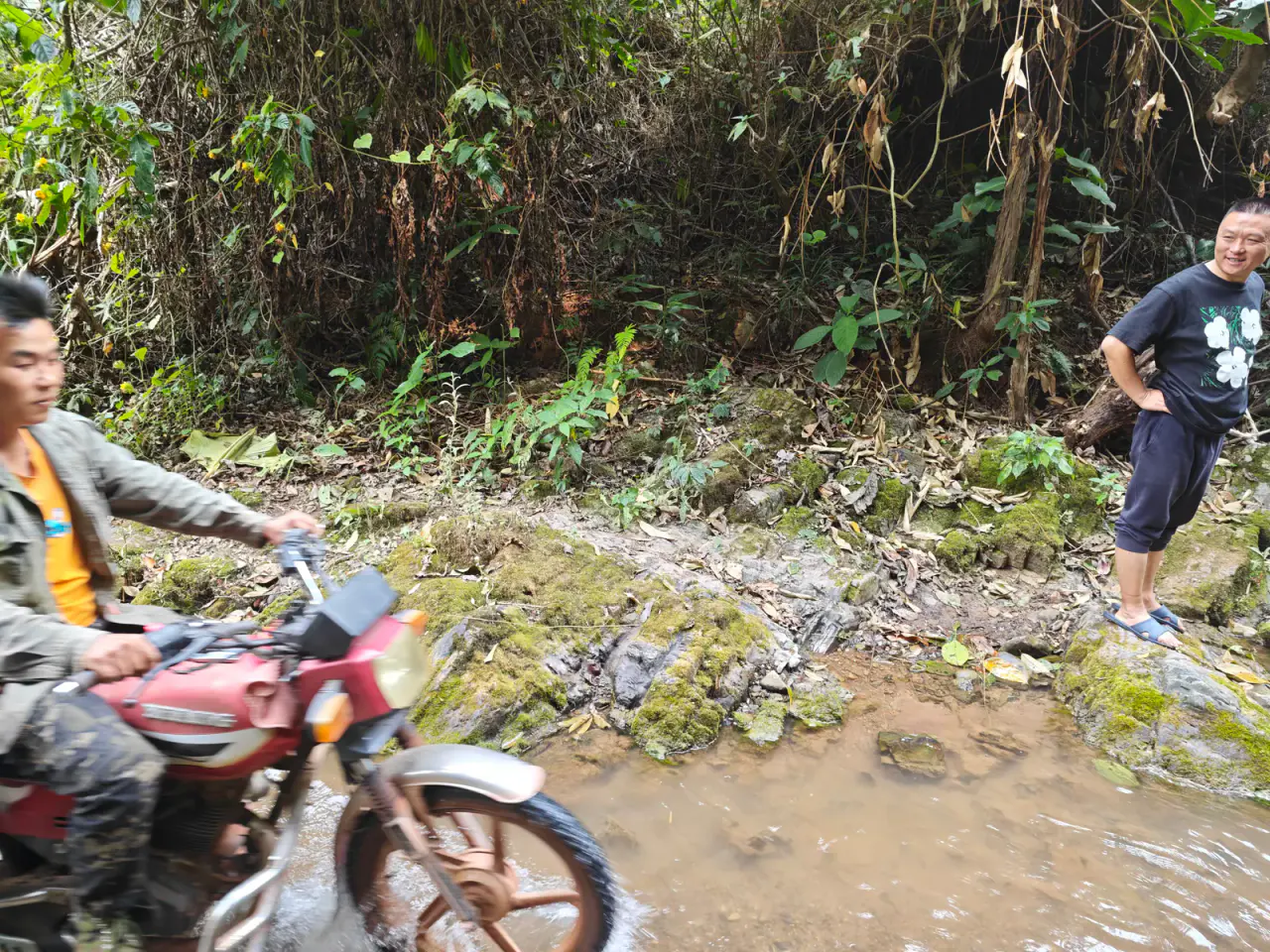
The best picture of access was taken almost by accident. A motorbike crosses the water, a large woven basket tied behind the rider. Another man waits on the rocks. The road is the stream and the stream is the road.
For visitors, this section was an adventure. For the people carrying leaf, it was transport. That difference is easy to forget when “remote forest tea” becomes a premium phrase. The distance is not an atmosphere added to the product. It is time, fuel, balance, weather and risk borne by somebody.
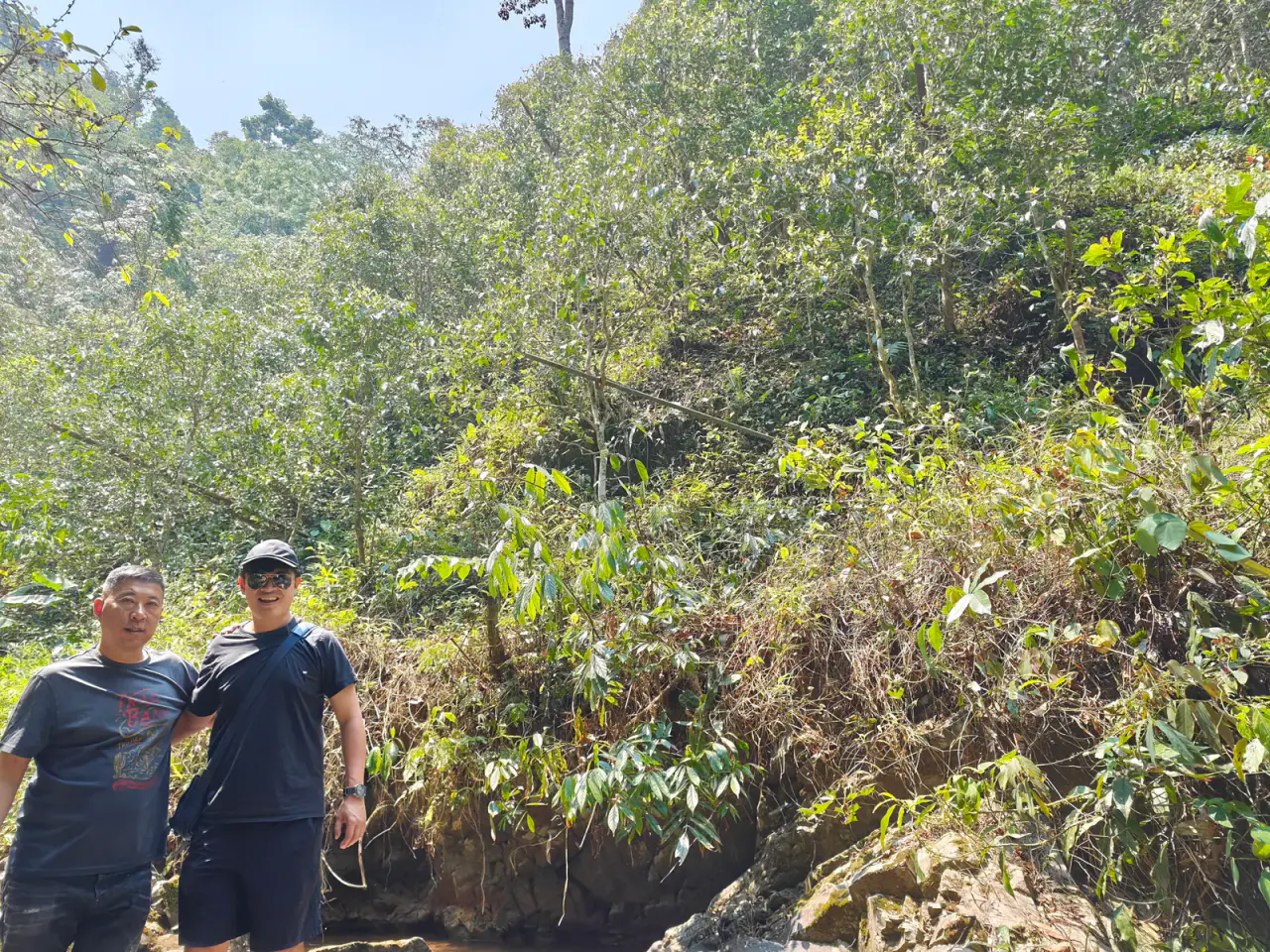
We followed the water on foot. Some sections were shallow enough to walk through; others narrowed under dense vegetation. Forest tea appeared above the banks, mixed into the hillside rather than arranged as a clean garden. The photographs include people for scale because the vegetation otherwise flattens into a wall of green.
A valley between the forest and the factory room
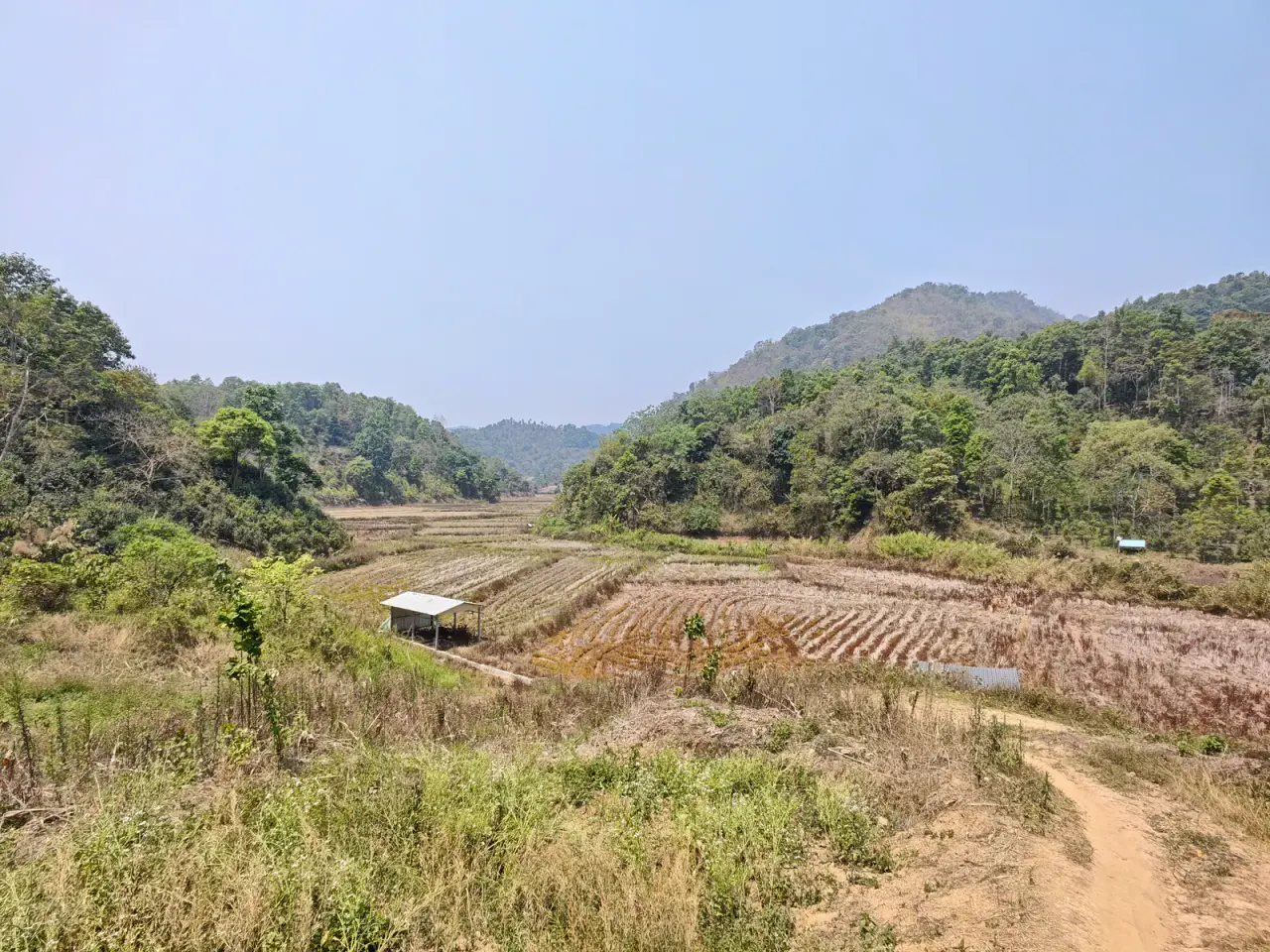
After hours of enclosed forest, the route opened suddenly onto a broad cultivated valley. Dry rows curved across the floor while the surrounding hills stayed green. The change was a reminder that “tea mountain” landscapes are rarely only tea. Forest, food crops, homes, roads and processing all occupy the same system.
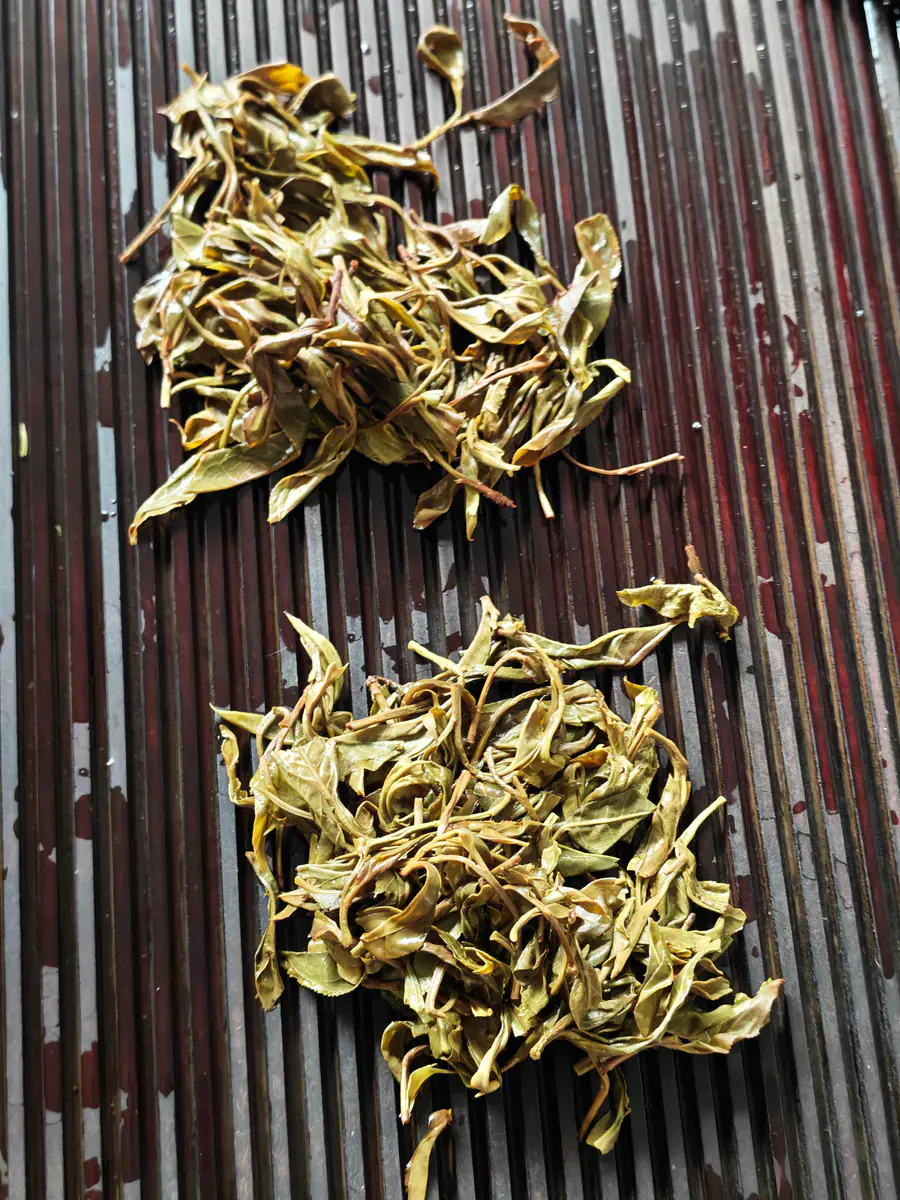
By late afternoon the camera was back with the leaf. Two wet piles sat side by side on a dark tea tray. Their structure differed visibly: one looser and more intact, the other denser, with more broken-looking leaf. Without the lot notes I will not assign either pile a village or tree category. The useful record is the comparison itself.
The day did not end at sunset
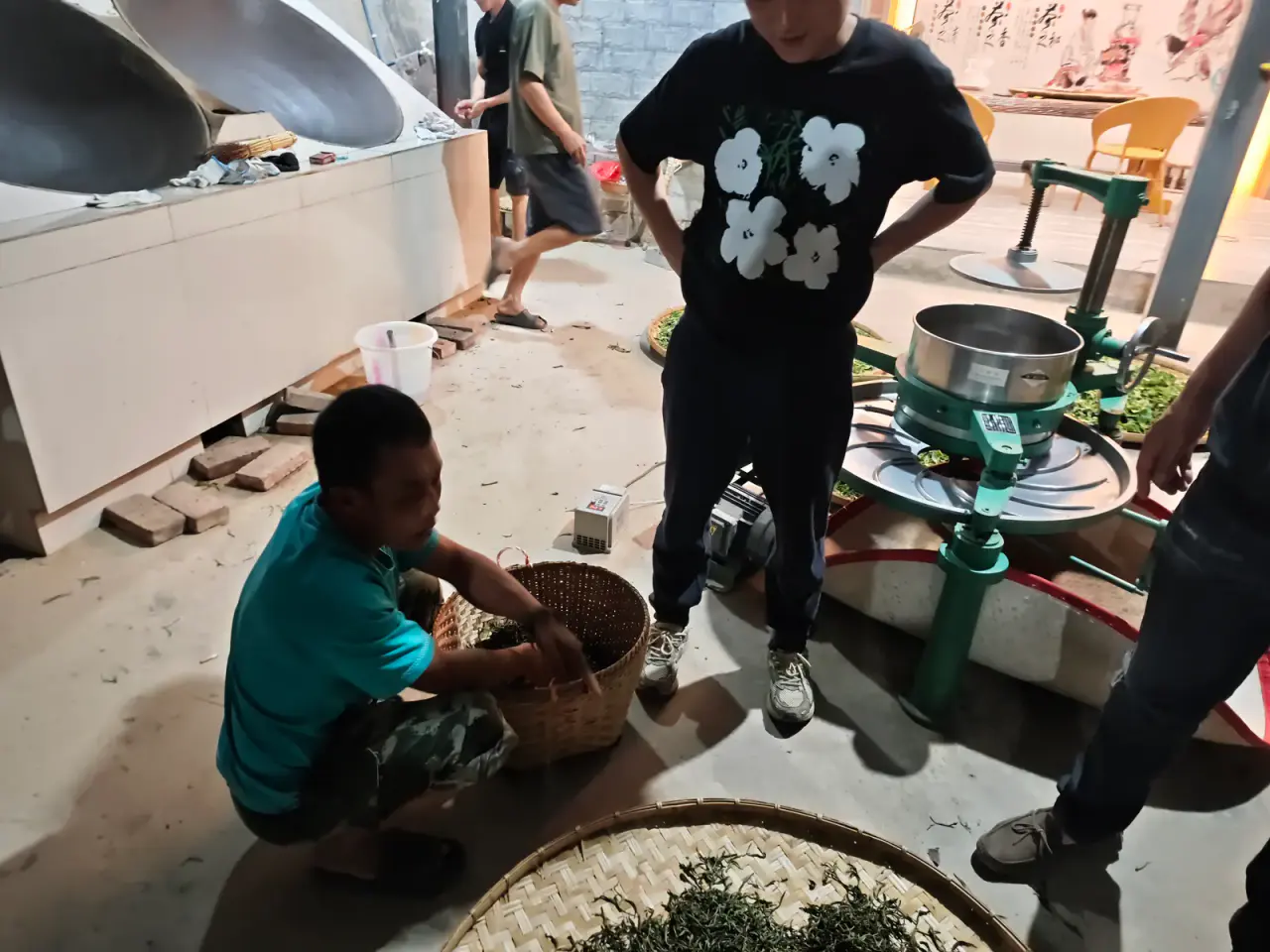
At 9:59 p.m. the photographs were still in the processing room. Large woks occupied one wall. Fresh leaf waited on trays. A green rolling machine stood in the centre while people worked around it.
This was the point at which the trip’s vocabulary finally joined up. Garden, distance, basket, heat, rolling and drying were no longer separate subjects. They were consecutive parts of one day, and a mistake or delay in any one of them would travel into the cup.
The Yiwu section began with a famous gate and ended on a concrete floor under electric light. I like that ending. The gate tells you where you have arrived. The night room shows why arrival is only the beginning.
Back to the series: Yunnan 2026: The Roads Behind the Tea Names.
Quick answers
Frequently asked questions
Where is Guafengzhai in the Yiwu tea region?
Guafengzhai is a village in the wider Yiwu tea system of Mengla County, Xishuangbanna. Tea sold under its name may come from different garden areas, so the village label is only the first layer of provenance.
Why do roads matter to Pu-erh tea production?
Fresh leaf begins changing as soon as it is picked. Distance, weather, road conditions and transport time affect how quickly it reaches processing and how carefully a remote lot can be handled.
Does visiting Guafengzhai prove a retail tea came from there?
No. A field visit explains the place and its production constraints. Authentication still requires records connecting the specific garden, harvest, processor and finished batch.