Lao Banzhang Is a Village, Not a Wrapper
A first day in Menghai among Lao Banzhang tea trees, fresh leaf and the ordinary work hidden behind Pu-erh’s most expensive village name.
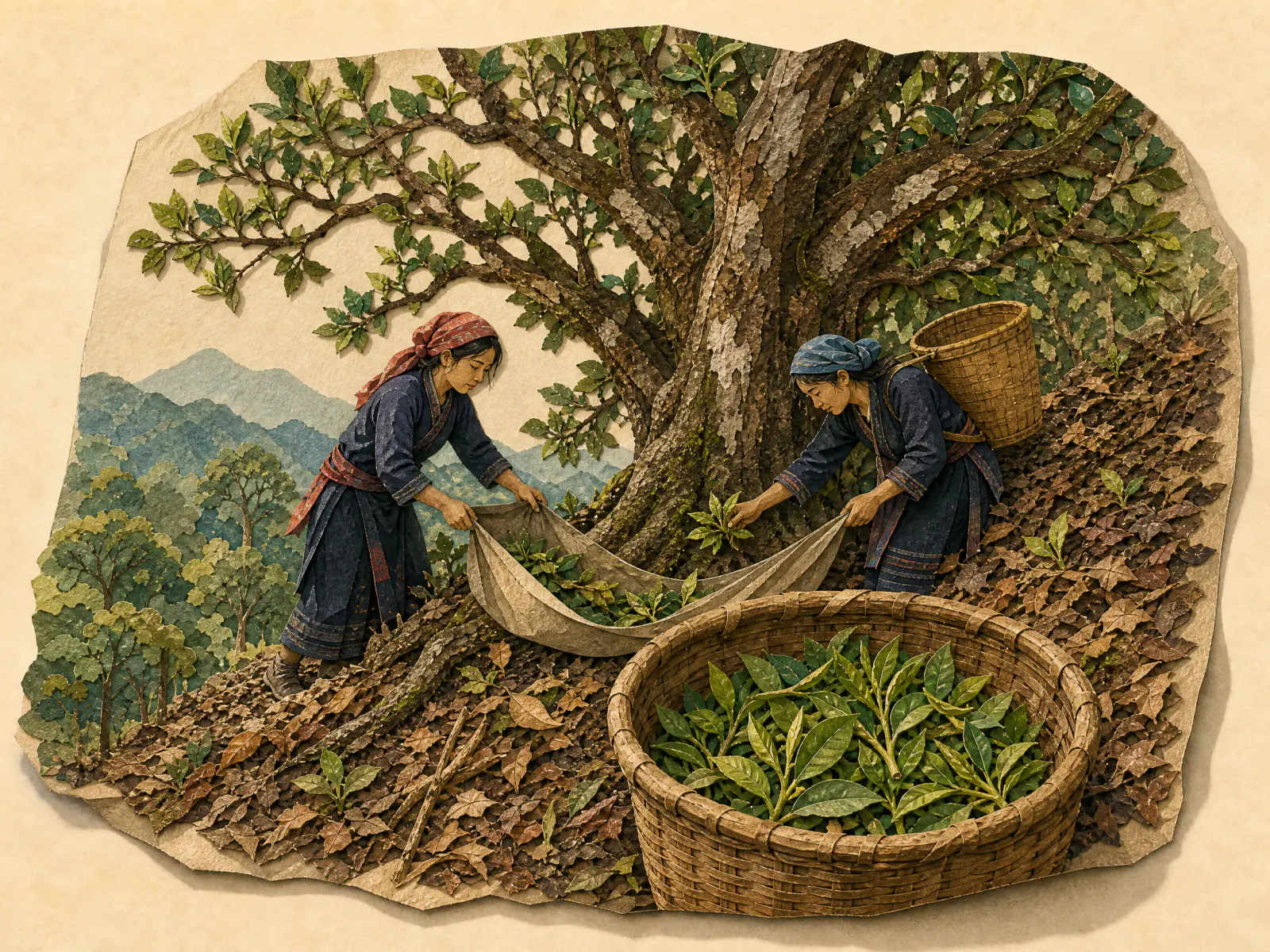
Lao Banzhang is sold as a taste and quoted as a price. In person, it first arrived as a road.
The April 1 photographs begin with driving, a simple lunch stop and a tea room. Later the GPS trail settles into Bulang Mountain township: first around the gardens east of Lao Banzhang, then back toward the village. The sequence is useful because it refuses the polished version of the name. Before there is a cake, there are hillsides, old trunks, carrying cloths, fresh leaf and people deciding what must happen next.
A garden with no flat angle
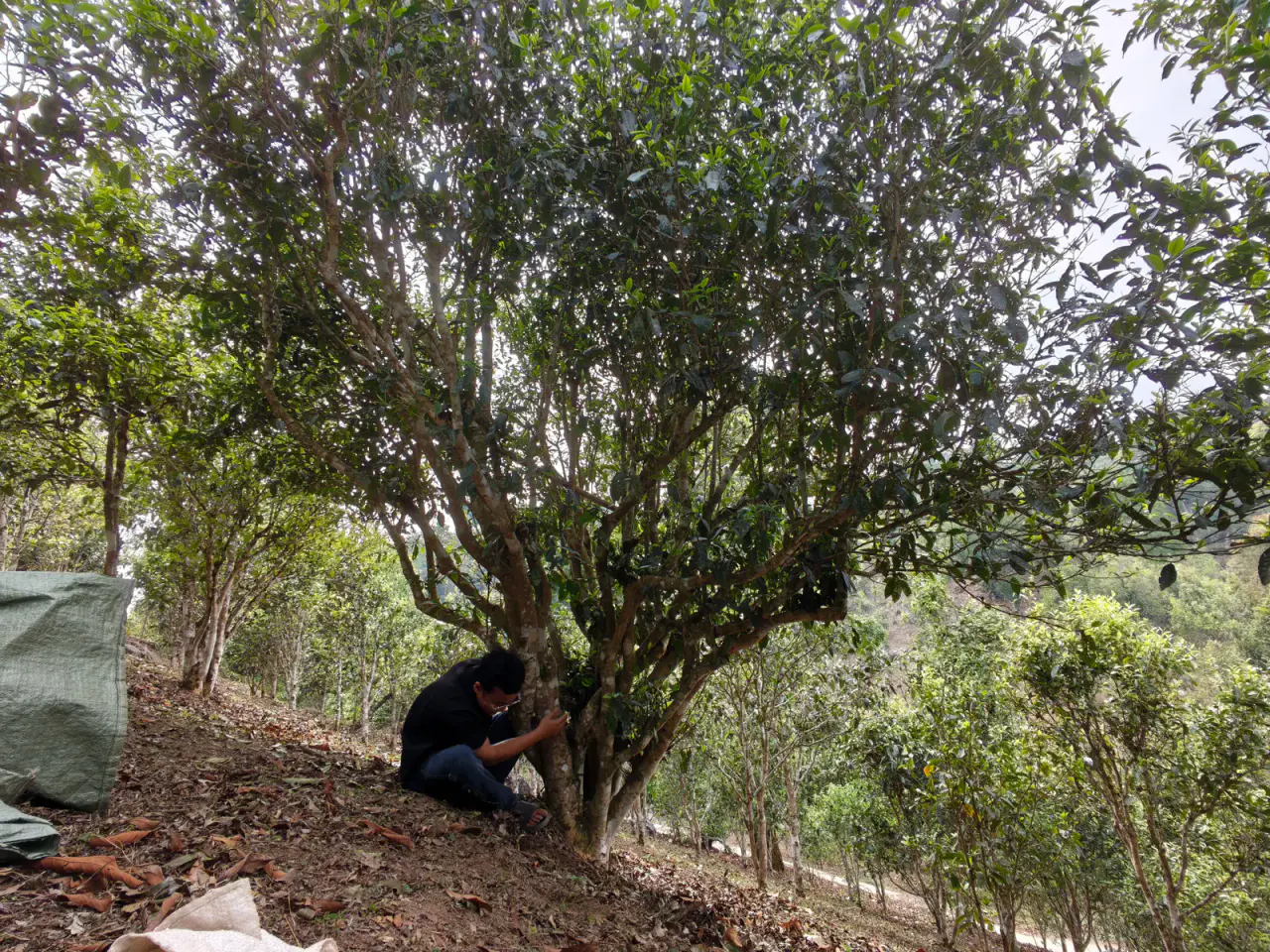
The first thing the wide photograph preserves is the slope. The tea tree fills the upper half of the frame, but the ground falls away under it. Dry leaves slide downhill. The picking cloth cannot simply be placed anywhere. Standing beside the trunk makes the tree look large; sitting under it makes the terrain look larger.
Tea marketing tends to isolate an old tree. It removes the neighbouring growth, the soil and the path until only the trunk remains, ready to act as proof of age. The garden did the opposite. Trees appeared in groups, with different shapes and different amounts of human intervention. Some opened close to the ground with several heavy branches. Others rose through surrounding vegetation. The camera could show form, but it could not certify an age claim—and that distinction matters.
What the camera could certify was physical context: a dry spring hillside around 1,740–1,820 metres, uneven garden spacing, workers carrying large sacks, and enough distance between road and tree to make every basket a small logistics problem.
The gate and the garden are not the same claim
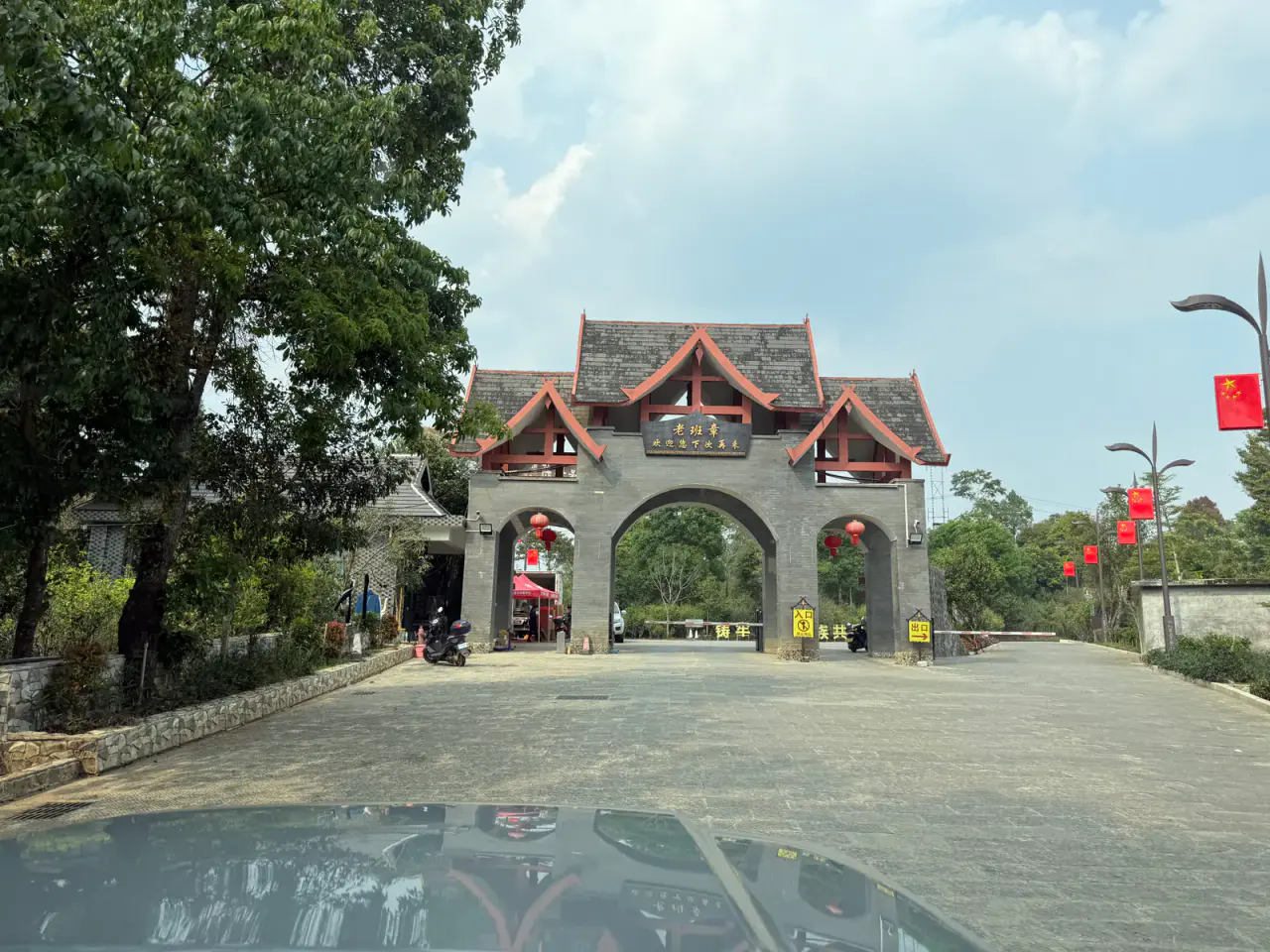
The afternoon images reach the formal village entrance. It is the photograph everybody recognises and the one most easily used as a shortcut: person plus gate equals provenance.
But the day had already shown why that shortcut is weak. A village name covers homes, roads, processing spaces and multiple gardens. Leaf moves. People move. A camera moves even faster. The useful record is not one image at the entrance but a chain: timestamp, coordinates, garden, basket, leaf and processing.
That does not turn a holiday camera roll into a traceability system. It does make it harder to tell yourself a convenient story later.
Fresh leaf is where categories become visible
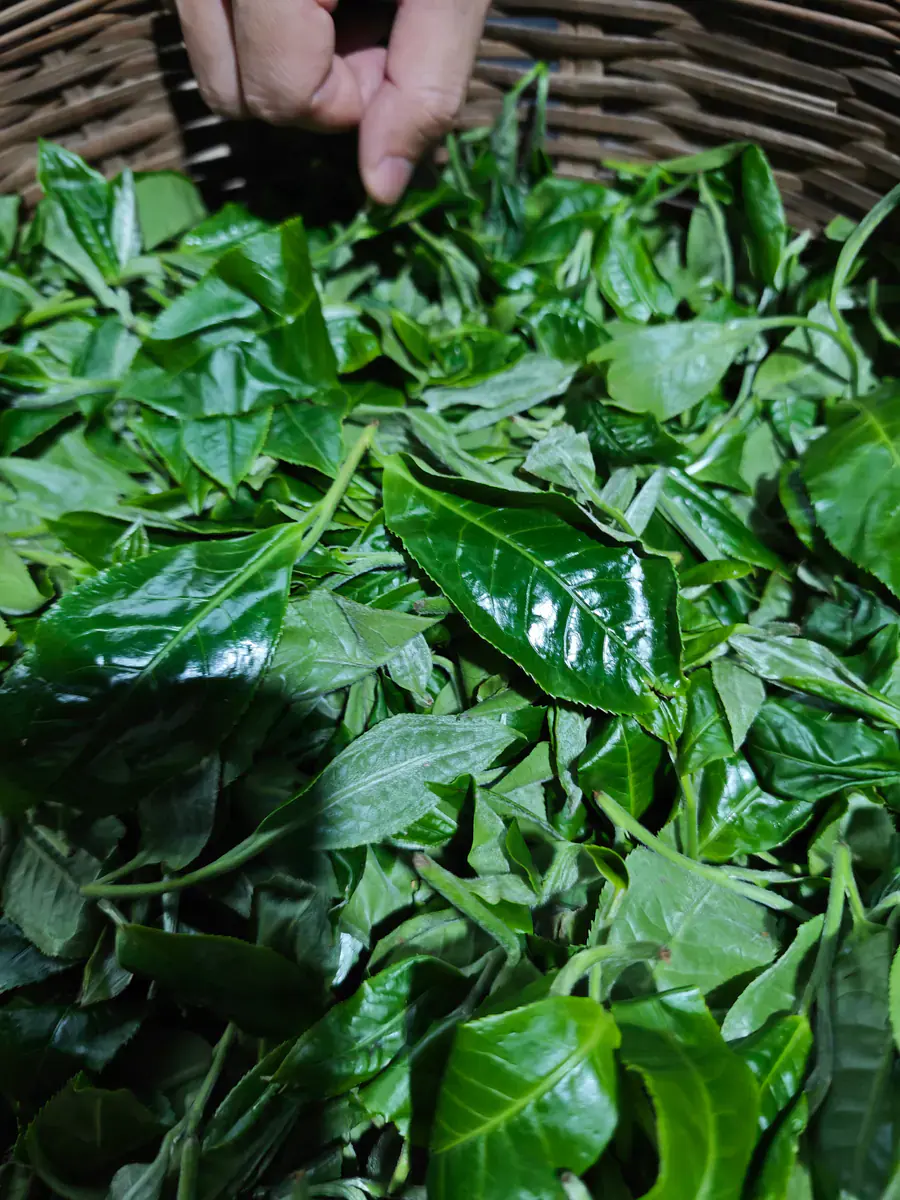
By evening, the camera was close to the leaf. The basket contained glossy spring growth with a mix of buds, open leaves and stems. This was the point when broad sales terms—“ancient tree,” “pure material,” “first spring”—felt least useful on their own.
Fresh leaf asks more practical questions. Is the picking standard consistent? How long has the leaf been sitting? Was it kept cool and loose or compressed in transport? Does one basket represent one garden, several trees or a wider village blend? None of those questions can be answered from this photograph alone, but the photograph makes clear what a useful answer would need to describe.
Dinner completed the provenance record
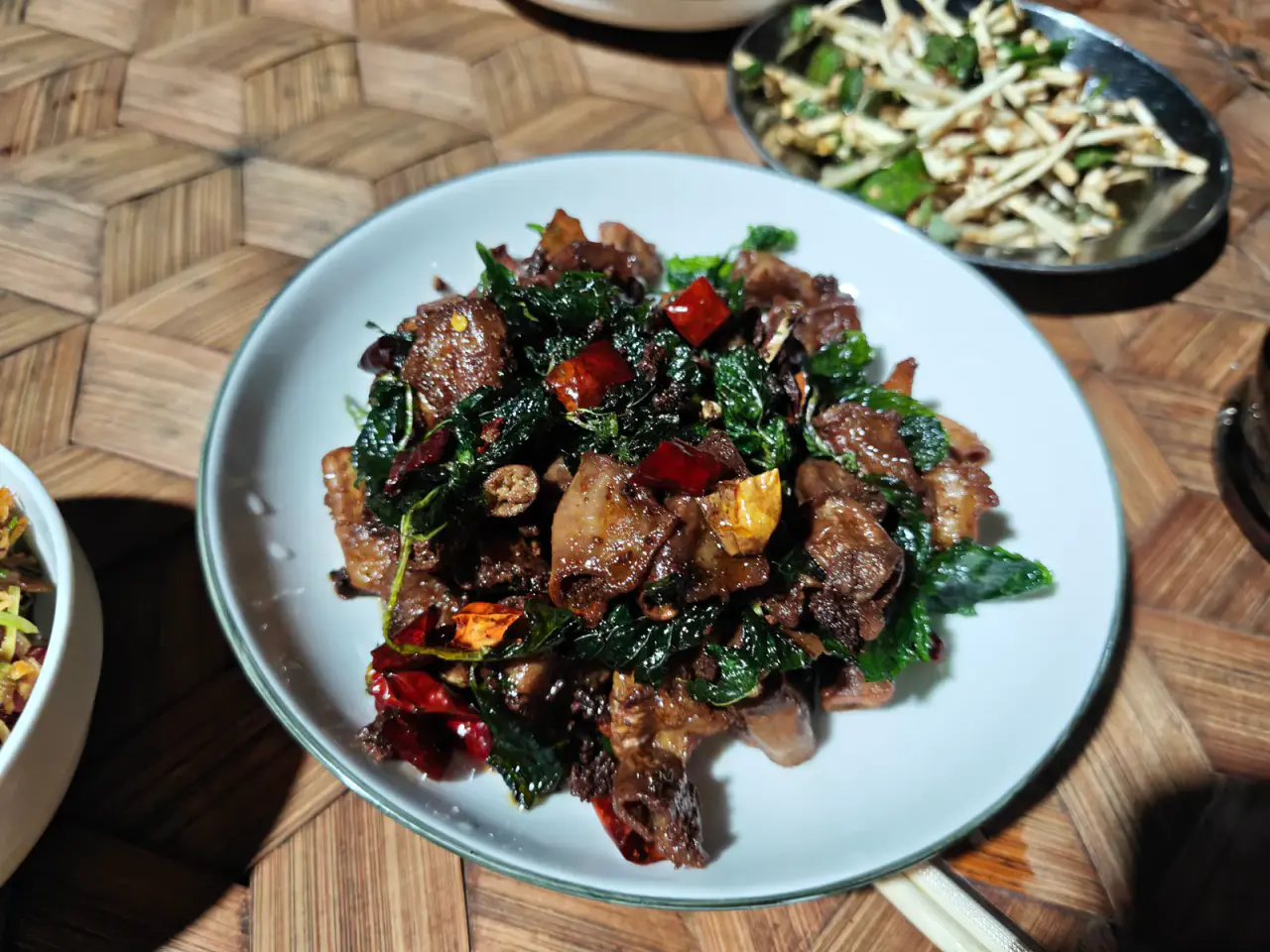
The last photographs are food, people and a village entrance at night. They would be easy to cut from a tea article. I think they belong.
Origin is not only altitude and tree age. It is also the pace of a day: how long it takes to reach a garden, when leaf comes back, who is still working and when everyone finally eats. Lao Banzhang’s price can make the village feel abstract. Dinner returned it to ordinary scale.
I left the first day with fewer clean claims and a better picture. Lao Banzhang was no longer a flavour word or the top row of a price table. It was a place where the slope mattered, leaf had to be carried, and the work continued after the photograph under the old tree.
Next: At 2,000 Metres in Mengsong.
Quick answers
Frequently asked questions
Is Lao Banzhang a village or a tea brand?
Lao Banzhang is a real village in the Bulang Mountain area of Menghai County. Its name is also used commercially, so a wrapper still needs batch-level evidence connecting the tea to the village.
What did the visit reveal about Lao Banzhang tea?
The visit made the physical work visible: steep gardens, picking decisions, fresh-leaf categories and rapid processing. Those details are more informative than treating the village name as one fixed flavour.
Does a visit to Lao Banzhang authenticate a cake?
No. A visit documents a place at one moment. A retail cake needs its own harvest, maker, batch and chain-of-custody evidence.